Households across the United Kingdom have continued to face financial challenges as the cost of everyday essentials remains higher than in previous years. Energy prices, food costs and housing expenses have all placed increasing pressure on family budgets.
To help ease some of this financial strain, the government has introduced several cost-of-living support measures in recent years. These programmes are designed to provide temporary financial assistance for individuals and families who may be struggling with higher expenses.
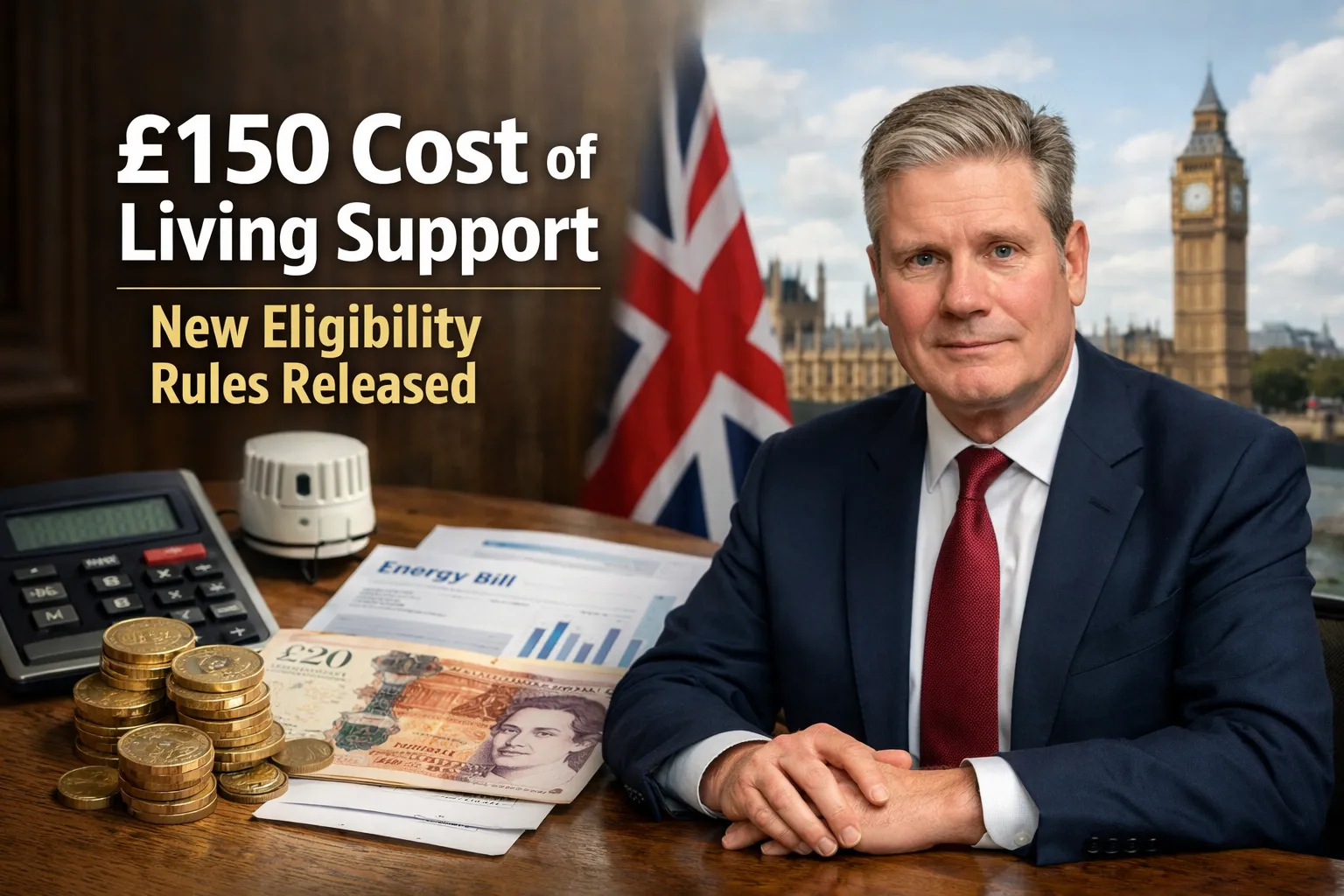
One of the latest updates involves a £150 cost of living support payment confirmed by the government. The payment is expected to help eligible households manage essential expenses during a period of ongoing economic pressure.
Understanding how this support works, who may qualify and how payments are delivered can help households determine whether they may benefit from the scheme.
Why Cost of Living Support Payments Are Introduced
Cost-of-living payments are designed to provide extra financial assistance during periods when inflation increases the price of everyday goods and services.
When living costs rise quickly, many households find it harder to cover basic expenses. This situation can be particularly difficult for people who rely on fixed incomes such as pensions or government benefits.
To help address these pressures, governments sometimes introduce temporary support payments. These payments are designed to supplement existing income rather than replace regular wages or benefits.
By providing targeted financial assistance, cost-of-living payments aim to help households manage higher expenses until economic conditions improve.
What the £150 Support Payment Is
The £150 cost of living support payment is intended to provide a one-off financial boost to households that meet specific eligibility conditions.
Unlike regular benefit payments, this support is typically issued as a single payment rather than a recurring monthly benefit.
The purpose of the payment is to help households manage essential costs such as:
Energy and heating bills
Food and grocery purchases
Transport and fuel expenses
Other everyday household needs
Although the payment may not fully cover rising expenses, it can still provide helpful financial relief for people managing tight budgets.
For many households, even a modest payment can contribute toward covering essential living costs.
Who May Be Eligible for the Payment
Eligibility for cost-of-living payments often depends on whether someone receives certain government benefits or meets specific financial criteria.
Individuals receiving income-related benefits may be among the groups considered eligible for the £150 payment.
For example, people receiving support through programmes such as Universal Credit may qualify.
Other groups that may be considered include people receiving disability-related benefits or certain income-based assistance programmes.
Because each support scheme may have slightly different eligibility rules, checking official government guidance remains the most reliable way to confirm whether someone qualifies.
Why Eligibility Rules May Change
Support schemes often evolve over time depending on economic conditions and government policy decisions.
As living costs fluctuate and financial priorities shift, the government may adjust eligibility rules to ensure that support reaches those who need it most.
Some cost-of-living payments may focus on working-age households with lower incomes, while others may target pensioners or individuals receiving disability benefits.
These adjustments allow policymakers to direct financial support toward the groups most affected by rising prices.
How Payments Are Usually Issued
Most cost-of-living support payments are issued automatically to eligible recipients.
This means individuals who already receive qualifying benefits typically do not need to submit a separate application.
Instead, the payment is transferred directly into the same bank account used for their existing benefit payments.
Automatic payments help ensure that assistance reaches households quickly and efficiently.
Recipients may also receive a notification explaining the payment and confirming the amount deposited into their account.
How Cost of Living Payments Work With Other Benefits
The UK benefits system provides financial support to people who may face economic challenges due to unemployment, disability or lower income.
Programmes such as disability benefits, employment support payments and pension credits help ensure that individuals can meet essential living expenses.
Cost-of-living payments are designed to work alongside these existing benefits.
Rather than replacing regular support, they provide an additional financial boost during periods when household expenses increase.
This approach allows the government to provide targeted assistance without changing the structure of the broader benefits system.
Why Even Small Payments Can Help
Although £150 may appear relatively modest, it can still make a meaningful difference for households managing limited income.
For example, the payment could help cover a portion of an energy bill or provide additional funds for groceries.
Small financial boosts can also help households avoid relying on credit or loans to cover everyday expenses.
For pensioners and individuals living on fixed incomes, even a single payment can help maintain stability in household budgets.
Targeted support helps ensure that financial assistance reaches the people who may benefit from it the most.
Checking If You Qualify
Anyone who believes they may qualify for cost-of-living support should review their benefit information carefully.
Government websites and official communications provide detailed explanations about eligibility rules and payment schedules.
Checking benefit statements or online accounts may help confirm whether a payment is expected.
It is also important to ensure that personal details remain up to date with the relevant government department.
Information such as bank account details, address changes or changes in household circumstances should be reported promptly to avoid payment delays.
Staying Alert to Potential Scams
Whenever government support payments are announced, scammers sometimes attempt to exploit public interest.
Fraudulent messages may claim that individuals must provide personal details or pay fees to receive cost-of-living payments.
These messages often appear as emails, text messages or phone calls pretending to come from official government organisations.
People should remember that legitimate departments rarely request sensitive information through unsolicited communication.
If a suspicious message is received, it is safest to verify the information through official government websites before responding.
Managing Finances During Rising Costs
Even with government support payments, many households continue to face financial challenges.
Creating a household budget can help families track their income and spending more effectively.
Budgeting tools, financial advice services and community support organisations can also provide helpful guidance.
Reviewing benefit entitlements regularly may help ensure that households receive all the financial support available to them.
By staying informed about government programmes and planning household finances carefully, families can better manage periods of economic uncertainty.