
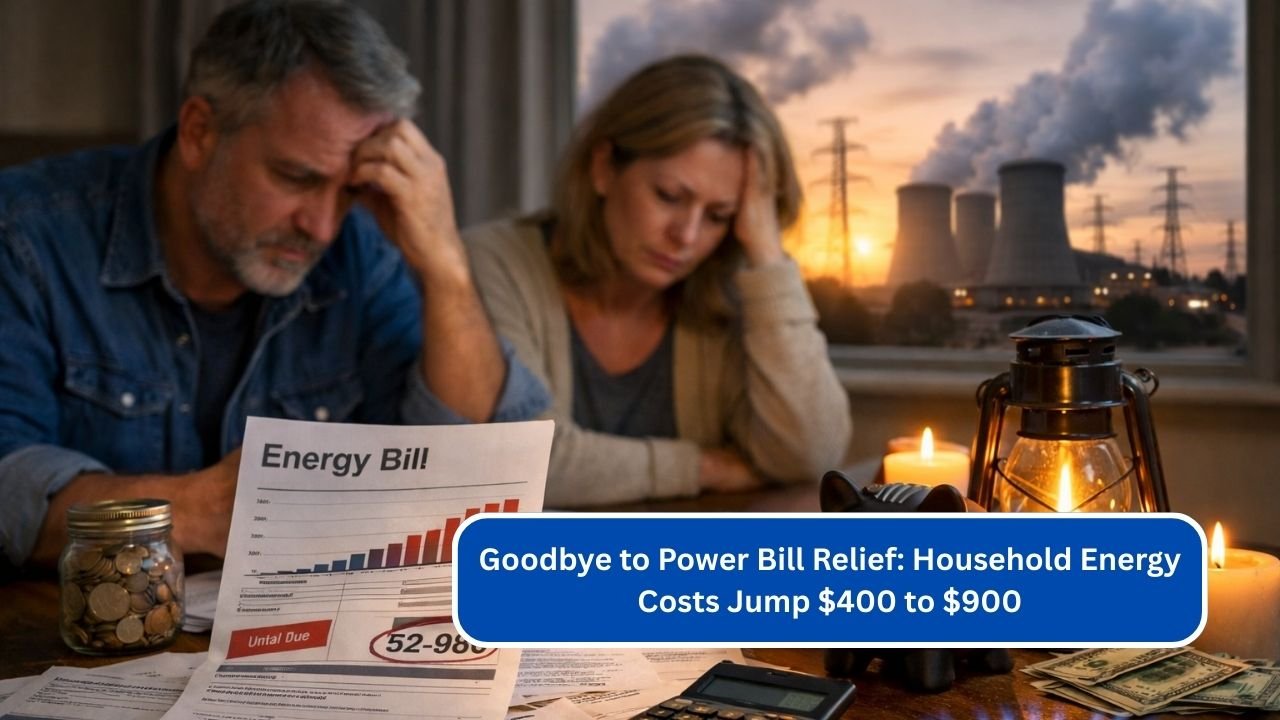
Households are preparing for a new wave of electricity price pressure as temporary energy relief programs come to an end. Beginning 15th March 2026, many families could experience noticeable increases in their annual electricity costs. Early estimates suggest that households may see power bills rise by roughly $400 to $900 per year once subsidies disappear and energy providers fully adjust pricing to current market conditions.
For families already managing tight budgets, the end of these support programs may create additional financial stress. Over the past several years, government-backed relief measures helped soften the impact of rising electricity prices. With those programs now expiring, households are expected to face the full cost of electricity again.
Energy experts say the coming months may mark a significant transition period for household energy expenses, with many consumers seeing their first major price adjustments in years.
End of Power Bill Relief Increases Household Costs
Temporary electricity relief programs were introduced to help households cope with rising energy prices during periods of economic uncertainty and market instability. These measures provided direct bill credits, rebates, or price caps that helped reduce the amount families paid for electricity.
However, as governments scale back emergency spending and return energy markets to normal pricing systems, these relief programs are being phased out.
Without subsidies lowering the cost of electricity, power companies are now adjusting rates to reflect real generation costs, network maintenance, and long-term infrastructure investments. As a result, many households could see noticeable increases in their monthly electricity bills starting this year.
For some families, the difference may appear gradually through higher quarterly bills, while others could experience a more immediate jump depending on their energy provider and usage levels.
Multiple Factors Driving Electricity Price Increases
The expected rise in electricity costs is not being caused by a single issue. Instead, several economic and industry factors are pushing prices upward at the same time.
Energy producers are currently facing higher fuel costs, particularly for natural gas and other traditional generation sources. At the same time, electricity grids require ongoing upgrades to support modern infrastructure and renewable energy integration.
Investments in transmission networks, energy storage systems, and reliability improvements are essential for long-term stability, but these upgrades often translate into higher operational costs that are passed on to consumers.
Another major factor is the increasing demand for electricity. As households rely more on electric appliances, heating systems, home electronics, and digital devices, overall power consumption continues to rise. This growing demand places additional pressure on electricity supply systems and contributes to higher prices.
Combined with the removal of bill relief programs, these market pressures are expected to result in the projected $400 to $900 annual increase for many households.
Household Electricity Demand Continues to Grow
Modern households are consuming more electricity than ever before. From smart home devices to high-powered kitchen appliances and home entertainment systems, electricity usage has steadily increased across most homes.
In colder months, electric heating systems significantly increase consumption, while during warmer periods air conditioning units can add additional strain on power demand. Remote work trends have also contributed to higher residential electricity usage, as more people spend longer hours at home using computers and other electronic equipment.
As demand continues to grow, energy providers must invest in stronger grids and expanded power generation capacity. These investments are necessary to maintain reliable electricity supply but may also lead to higher consumer pricing over time.
For households, understanding energy consumption patterns is becoming increasingly important as electricity prices rise.
Simple Steps to Manage Higher Energy Bills
Although rising electricity costs may be unavoidable in the short term, there are several practical steps households can take to reduce the financial impact.
Improving home energy efficiency is often the most effective strategy. Better insulation can prevent heat loss during winter and reduce cooling needs during summer, lowering overall electricity consumption.
Switching to energy-efficient appliances can also help households save money over time. Modern appliances often use significantly less electricity than older models while delivering the same level of performance.
Adjusting daily usage habits can also make a noticeable difference. Turning off unused lights, reducing standby power usage, and running major appliances during off-peak hours are simple changes that can help lower electricity bills.
Many households are also beginning to use energy monitoring devices that track electricity consumption in real time. These tools allow families to identify high-usage appliances and adjust their energy habits accordingly.
The Long Term Impact on Household Budgets
The end of energy relief programs represents a significant shift for household financial planning. Many families had grown accustomed to lower electricity bills due to temporary government support over recent years.
As these programs expire, the return to market-based pricing may feel like a sudden financial adjustment for some households. Energy expenses will once again become a larger portion of monthly budgets, particularly for families with higher electricity usage.
Financial analysts believe that this change could encourage greater awareness around energy consumption and efficiency. As electricity prices rise, more households may begin investing in home upgrades, energy monitoring systems, and efficiency improvements to reduce long-term costs.
At the same time, policymakers and energy experts continue to explore strategies for maintaining affordable electricity while supporting infrastructure improvements and clean energy transitions.
Key Factors Influencing Electricity Prices
| Energy Cost Factor | Impact on Households |
|---|---|
| End of bill relief programs | Higher monthly electricity charges |
| Rising fuel costs | Increased generation expenses |
| Grid modernization | Infrastructure investments reflected in bills |
| Growing electricity demand | Higher consumption costs |
| Energy efficiency improvements | Potential long-term savings |
Looking Ahead
The upcoming rise in electricity prices highlights the ongoing challenges facing the energy sector. While infrastructure upgrades and energy system improvements are necessary for long-term reliability, they often come with short-term cost increases for consumers.
For households, preparing early and adopting energy-saving habits may help reduce the impact of rising electricity bills. By improving efficiency and monitoring usage, families can take practical steps to manage their energy expenses even as market conditions change.
As electricity demand continues to grow and energy systems evolve, the focus on efficient power usage and smarter home energy management is likely to become increasingly important in the years ahead.