
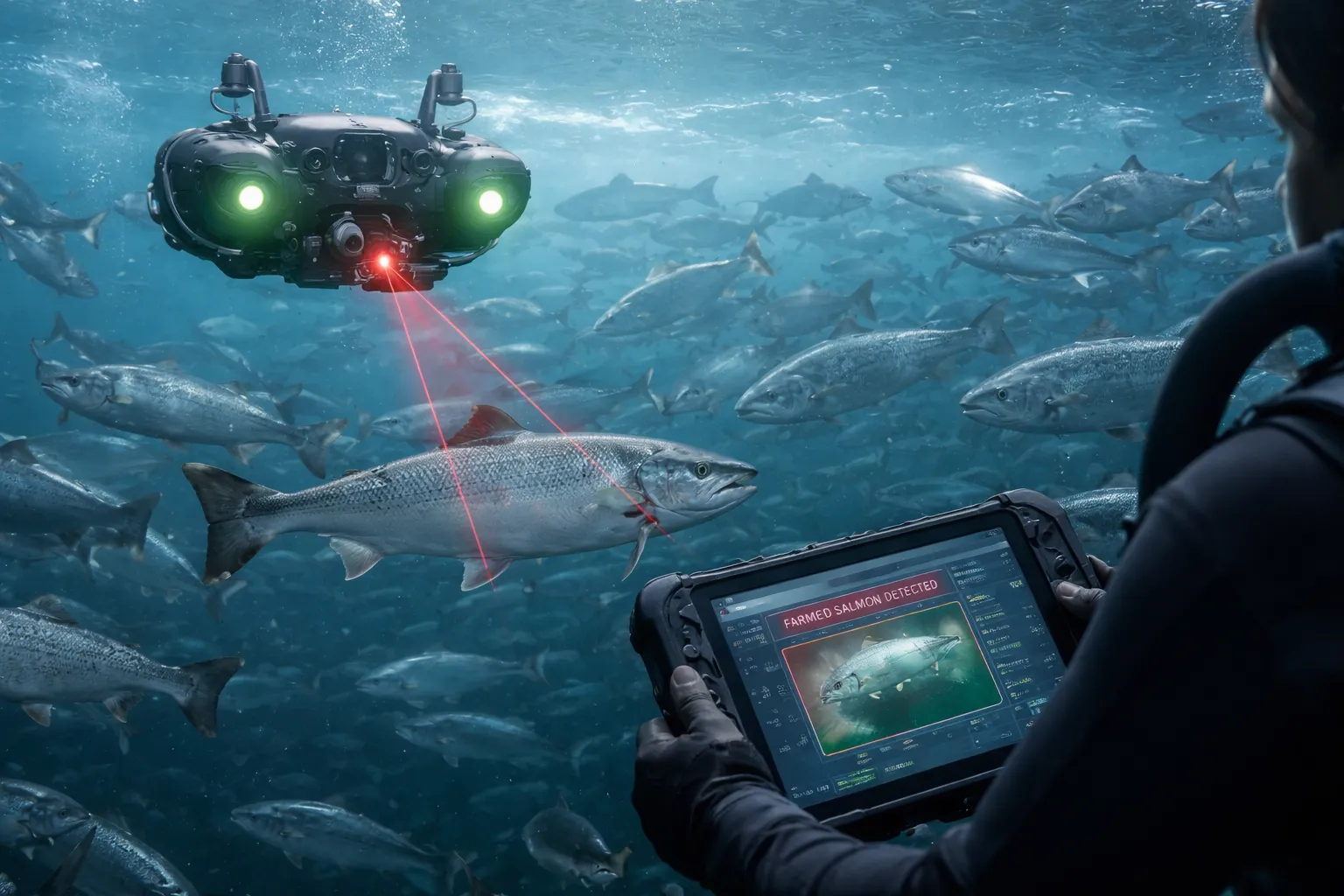
In recent years, artificial intelligence has transformed many areas of science and environmental monitoring. From tracking wildlife populations to predicting climate patterns, advanced technologies are helping researchers better understand the natural world. One of the latest breakthroughs involves the use of artificial intelligence to identify farmed salmon that escape into the wild.
This development could play an important role in protecting wild fish populations and maintaining the health of marine ecosystems. By using AI-powered tools, scientists can now detect differences between farmed and wild salmon more quickly and accurately than ever before.
The Growing Challenge of Escaped Farmed Salmon
Aquaculture, or fish farming, has become one of the fastest-growing food industries in the world. Farmed salmon are raised in large ocean enclosures and later harvested for consumption. While this method helps meet global demand for seafood, it also comes with environmental concerns.
One major issue occurs when farmed salmon escape from their pens due to storms, equipment failure, or human error. Once in the open ocean, these fish can mix with wild salmon populations.
Escaped salmon may compete with wild fish for food and habitat. They can also introduce diseases or parasites that spread to natural populations. In some cases, farmed salmon may even breed with wild salmon, potentially weakening genetic traits that have evolved over thousands of years.
Because of these risks, identifying farmed fish in the wild has become an important task for marine scientists.
Why Identifying Farmed Salmon Is Difficult
Distinguishing farmed salmon from wild salmon is not always easy. Although farmed fish are raised in controlled environments, they often look very similar to their wild counterparts once they enter natural waters.
Traditional identification methods involve physical inspections, genetic testing, or tagging systems. While these techniques can be effective, they are often time-consuming and expensive.
Researchers have been searching for faster and more efficient ways to detect escaped fish, especially in areas where aquaculture operations are common.
This is where artificial intelligence has begun to make a difference.
How Artificial Intelligence Detects Differences
The new AI system works by analyzing visual patterns in salmon images. Researchers trained the algorithm using thousands of photographs of both farmed and wild salmon.
By studying these images, the AI learned to recognize subtle differences in body shape, scale patterns, fin condition, and other physical characteristics.
Farmed salmon, for example, may develop slightly different body structures because they grow in crowded pens and receive controlled diets. Their fins may also appear more worn due to contact with enclosure nets or other fish.
The AI system can detect these differences far more quickly than a human observer. Once trained, the technology can analyze large numbers of fish images and classify them with impressive accuracy.
Faster Monitoring of Marine Ecosystems
One of the biggest advantages of AI identification is speed. Scientists monitoring rivers, coastal areas, or fishing catches can quickly determine whether a salmon is wild or farmed.
This information allows researchers to track the movement of escaped fish and understand how frequently farmed salmon enter natural habitats.
Faster identification also helps authorities respond more quickly when escape events occur. Early detection may allow fishery managers to remove escaped salmon before they spread diseases or disrupt local ecosystems.
Supporting Conservation of Wild Salmon
Wild salmon populations in many regions are already under pressure from habitat loss, climate change, and overfishing. The presence of escaped farmed salmon can add another layer of stress to these fragile populations.
AI-based identification tools provide scientists with valuable data about where farmed fish are appearing and how they interact with wild species.
With better information, conservation groups and government agencies can develop strategies to protect wild salmon more effectively. This may include improving fish farm infrastructure, adjusting regulations, or strengthening monitoring programs.
The Future of AI in Aquaculture Monitoring
The success of this AI system demonstrates how advanced technology can support environmental protection. As machine learning models continue to improve, they may be able to identify other species or detect additional signs of environmental change.
Researchers are already exploring ways to combine AI with underwater cameras, drones, and automated monitoring systems. These tools could allow scientists to observe marine ecosystems in real time and respond to potential problems much faster.
In the future, similar technologies may also help track invasive species, monitor fish health, and measure biodiversity in ocean environments.
Balancing Food Production and Environmental Protection
Aquaculture plays a critical role in global food production. With the world’s population continuing to grow, farmed seafood provides an important source of protein for millions of people.
However, maintaining a balance between food production and environmental protection remains essential. Technologies such as AI-powered salmon identification offer a promising solution.
By helping researchers detect escaped farmed fish more efficiently, this breakthrough supports both sustainable aquaculture and the long-term health of wild ecosystems.
Conclusion
The use of artificial intelligence to identify farmed salmon in the wild represents a significant step forward in marine science. By analyzing subtle physical differences between farmed and wild fish, AI systems can provide faster and more accurate identification than traditional methods.
This technology gives scientists valuable tools for monitoring escape events, protecting natural salmon populations, and improving aquaculture practices.
As AI continues to evolve, its role in environmental research will likely expand, offering new ways to safeguard the delicate balance of our planet’s ecosystems.