
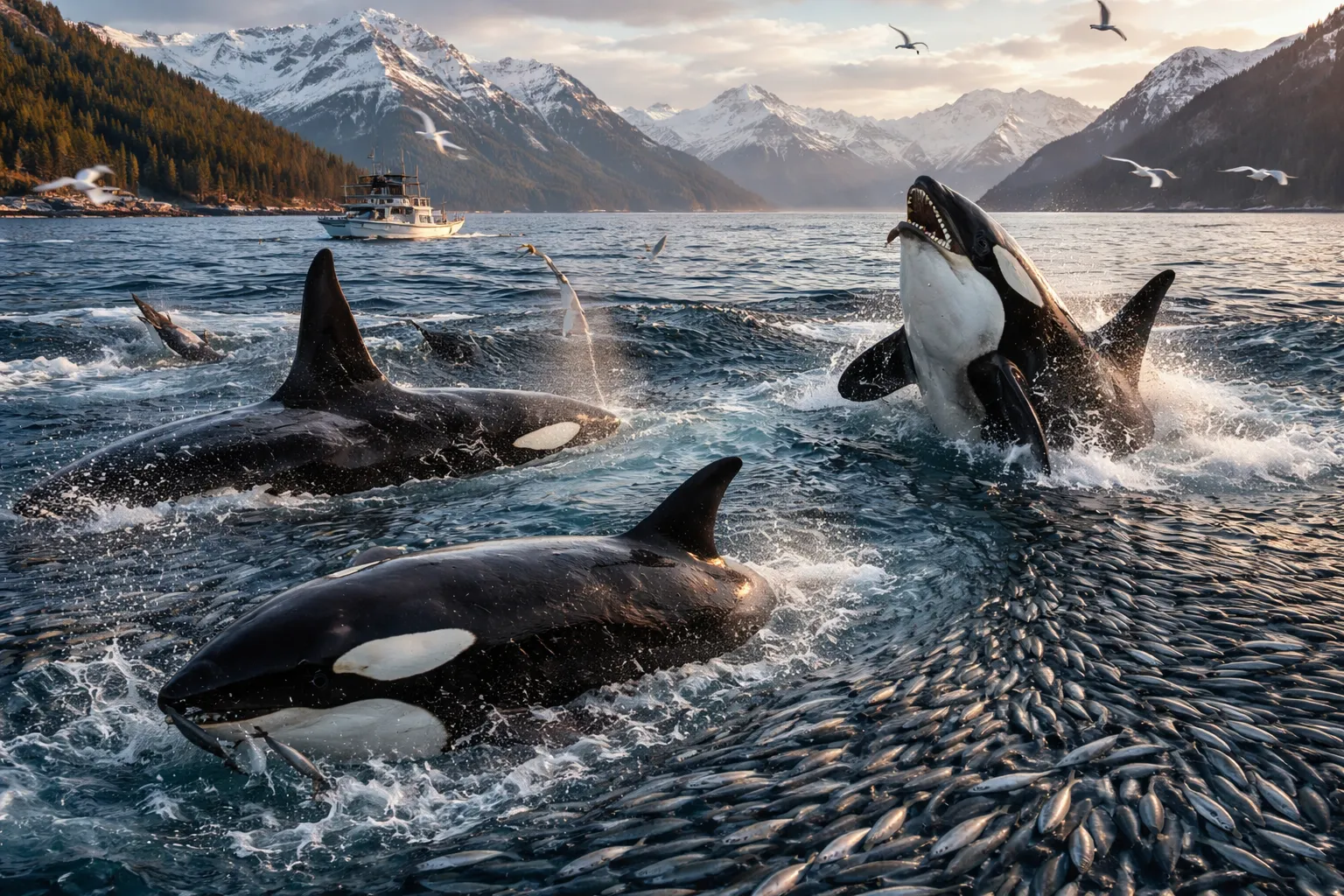
Orcas, also known as killer whales, are among the ocean’s most intelligent and adaptable predators. Found in oceans around the world, these powerful marine mammals have developed specialized hunting strategies that allow them to thrive in a wide range of environments. Recent research focusing on fish-eating orcas in Alaska has revealed a fascinating behavior: these whales are capable of switching prey depending on where they forage.
This discovery highlights the flexibility of orcas and offers new insights into how marine predators respond to changing ecosystems. Understanding these behaviors also helps scientists better protect both orcas and the fish populations they rely on for survival.
The Unique Diet of Fish-Eating Orcas
Not all orcas eat the same food. Scientists have identified several distinct groups, or ecotypes, of killer whales that specialize in different diets. Some populations primarily hunt marine mammals such as seals or sea lions, while others focus almost entirely on fish.
In the waters of Alaska and the northeastern Pacific Ocean, a group known as fish-eating orcas often targets salmon as their main source of food. Salmon provide high nutritional value and are abundant in many coastal regions.
Because salmon migrate through different waterways and seasonal routes, orcas must constantly adjust their hunting patterns to locate the most productive feeding areas.
Alaska’s Rich Foraging Hotspots
Alaska’s coastline contains a complex network of bays, straits, and fjords that support diverse marine life. These areas serve as important feeding grounds for many species, including fish-eating orcas.
Certain locations are considered “foraging hotspots,” where fish populations gather in large numbers. These hotspots can shift depending on water temperature, seasonal fish migrations, and ocean conditions.
Researchers studying orcas in Alaska have discovered that whales frequently travel between these hotspots, following the availability of prey.
Evidence of Prey Switching
Recent scientific observations have shown that fish-eating orcas do not rely exclusively on a single species of fish. Instead, they appear capable of switching between different types of prey when conditions change.
For example, when salmon are plentiful, orcas may focus heavily on hunting them. However, if salmon numbers decline or migrate to another region, the whales may shift to other fish species available in the same area.
This behavior demonstrates a level of flexibility that allows orcas to maintain stable feeding patterns even when prey availability fluctuates.
How Scientists Study Orca Diets
Understanding what orcas eat requires a combination of research techniques. Scientists often collect data through field observations, acoustic monitoring, and analysis of biological samples.
One common method involves studying fragments of fish remains left behind after feeding events. Researchers may also analyze genetic material found in whale waste or examine chemical markers in whale tissues.
These techniques allow scientists to identify which fish species orcas have recently consumed and track changes in their diets over time.
Adapting to a Changing Ocean
The ability of orcas to switch prey may be especially important as marine ecosystems face increasing environmental pressures. Climate change, shifts in ocean temperatures, and human activities can all influence fish populations.
When certain prey species become scarce, predators that rely on a single food source may struggle to survive. Orcas, however, appear to possess a level of dietary flexibility that helps them adapt to these changes.
By moving between foraging hotspots and targeting different fish species, they can continue finding enough food to support their large bodies and active lifestyles.
The Importance of Healthy Fish Populations
Although orcas can switch prey, they still depend on healthy fish populations to survive. Many fish species in Alaska play a critical role in maintaining the balance of marine ecosystems.
Salmon, for example, are not only an important food source for orcas but also support other wildlife, including bears, birds, and coastal communities that rely on fishing.
Protecting fish populations ensures that predators like orcas can continue to thrive while also supporting the broader ecosystem.
What This Means for Conservation
Understanding the feeding behavior of fish-eating orcas helps conservationists design better strategies to protect marine environments. If researchers know where orcas prefer to hunt and which fish species they rely on, they can identify areas that require special protection.
Monitoring foraging hotspots can also help scientists detect changes in ecosystem health. If orcas begin shifting prey more frequently, it could signal shifts in fish populations or broader environmental changes.
By combining whale tracking data with fish population studies, researchers can gain a clearer picture of how ocean ecosystems are evolving.
The Intelligence Behind Orca Hunting
Orcas are known for their complex social structures and advanced hunting techniques. Many pods develop specialized strategies that are passed down through generations.
The ability to switch prey across different foraging areas may also reflect this cultural knowledge. Young orcas learn from experienced members of their pod, observing how to locate fish and adapt to new conditions.
This shared learning process allows orca populations to maintain successful hunting behaviors even as their environment changes.
Conclusion
The discovery that fish-eating orcas switch prey across Alaska’s foraging hotspots reveals just how adaptable these marine predators truly are. By adjusting their diet based on local conditions, orcas can continue finding food even as fish populations shift.
This flexibility highlights the importance of understanding predator-prey relationships in the ocean. As researchers continue studying these remarkable animals, they gain valuable insights into how marine ecosystems function and how they can be protected.
Ensuring healthy fish populations and safeguarding important feeding grounds will remain essential for the long-term survival of both orcas and the diverse marine life that shares their habitat.