
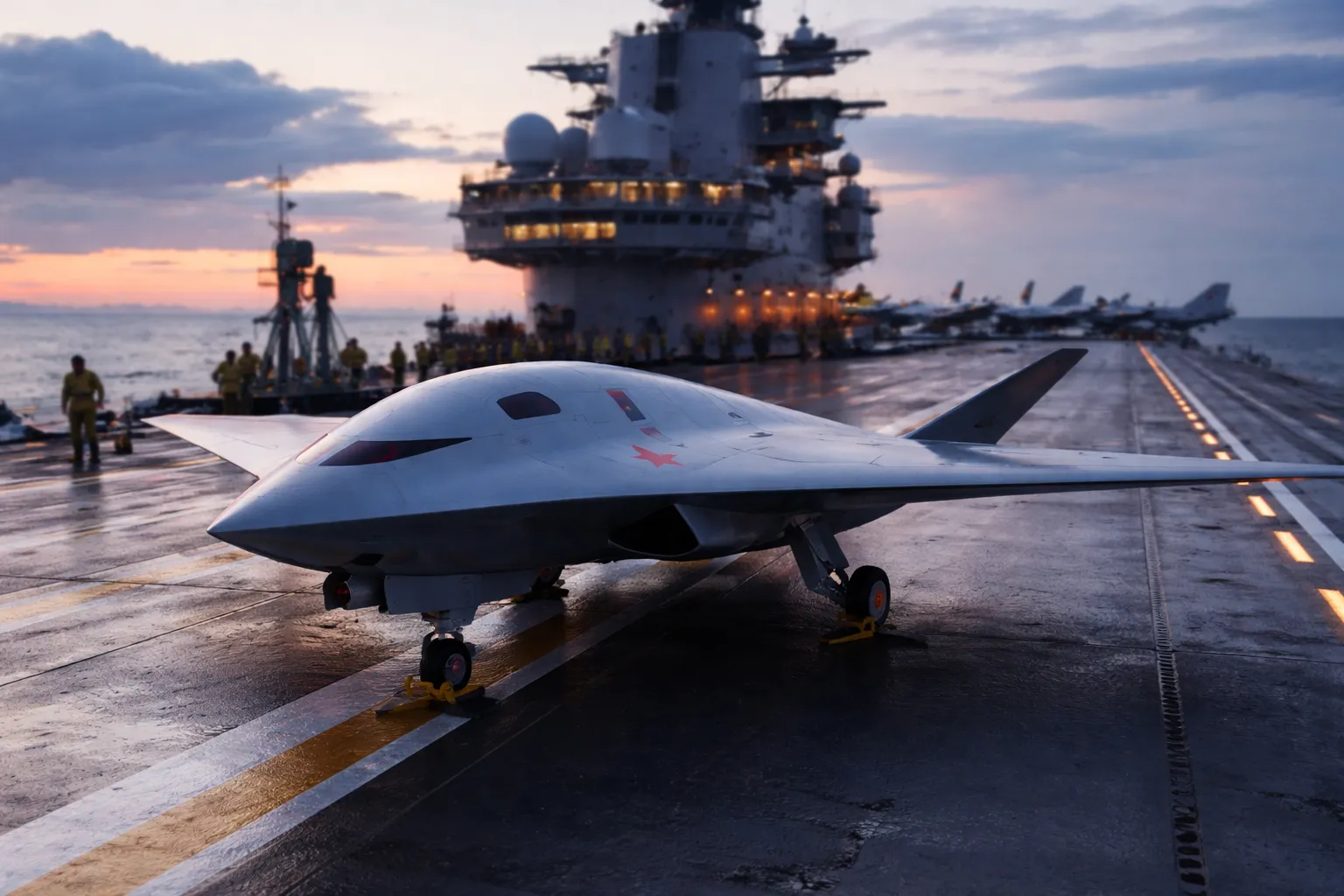
Military aviation is entering a new era where unmanned aircraft increasingly operate alongside traditional fighter jets. One of the most notable developments in this field is the concept of the “loyal wingman” drone, an unmanned aircraft designed to support crewed fighters during complex missions. Recent reports suggest that China may soon begin deck trials of a new loyal wingman drone designed for carrier operations.
If confirmed, this step would mark a significant advancement in naval aviation technology. Carrier-based drones capable of flying alongside manned aircraft could change how modern air forces conduct reconnaissance, surveillance, and combat missions.
What Is a Loyal Wingman Drone?
A loyal wingman drone is an unmanned aircraft that operates in coordination with a piloted fighter jet. Instead of replacing human pilots, these drones act as supporting aircraft that extend the capabilities of manned platforms.
The concept allows a single pilot to control or coordinate multiple drones that can perform tasks such as scouting enemy positions, carrying additional sensors, or even launching weapons. Because they are unmanned, these drones can also enter high-risk environments that might be too dangerous for crewed aircraft.
By combining human decision-making with autonomous technology, loyal wingman systems aim to create more flexible and effective air operations.
The Rise of Unmanned Combat Aircraft
Around the world, military forces are investing heavily in unmanned aerial systems. Advances in artificial intelligence, sensors, and communications have made it possible for drones to operate more independently while still remaining connected to human operators.
Unmanned aircraft can remain airborne for longer periods, carry specialized equipment, and perform surveillance missions without putting pilots at risk. As technology improves, these systems are becoming increasingly capable of supporting combat operations.
The loyal wingman concept represents one of the most advanced stages of this development, integrating drones directly into frontline air combat formations.
China’s Interest in Carrier-Based Drones
China has been rapidly expanding its naval aviation capabilities in recent years, including the development of aircraft carriers and advanced fighter aircraft. Introducing loyal wingman drones into carrier operations would be another step in modernizing naval air power.
Carrier-based drones present unique engineering challenges. Aircraft must be able to launch from short runways using catapult systems or ski-jump ramps and must also safely land on moving carrier decks.
To succeed in this environment, drones require reinforced landing gear, precise navigation systems, and advanced control technology capable of handling the complex conditions at sea.
Signs of Upcoming Deck Trials
Recent images and reports from aviation observers suggest that a new Chinese loyal wingman drone may soon undergo deck trials. Deck trials are an important phase of testing in which aircraft practice launching from and landing on aircraft carriers.
These tests allow engineers and pilots to evaluate how the aircraft performs under real operational conditions. They also help refine communication systems, navigation software, and safety procedures.
If the drone successfully completes these trials, it could eventually become part of future carrier air wings.
Potential Roles for the Drone
A carrier-based loyal wingman drone could perform several important functions during naval operations.
One possible role is reconnaissance. The drone could fly ahead of the main aircraft group to gather information about enemy positions, radar systems, or ships. This would allow crewed fighters to remain at safer distances while still receiving real-time intelligence.
Another potential role is electronic warfare. The drone could carry equipment designed to jam enemy radar or communication systems, helping protect friendly aircraft during missions.
Some designs may also allow the drone to carry weapons, enabling it to assist in offensive operations under the supervision of human pilots.
Advantages of the Loyal Wingman Concept
Integrating drones with crewed aircraft offers several advantages for modern air forces. First, drones can expand the reach and situational awareness of a pilot by providing additional sensors and surveillance capabilities.
Second, they can increase mission flexibility. A group of drones working with a single fighter jet can perform multiple tasks simultaneously, such as scouting, electronic warfare, and targeting.
Finally, drones reduce risk to human pilots by entering hazardous environments or drawing enemy attention away from crewed aircraft.
These advantages make loyal wingman systems attractive for both air force and naval aviation strategies.
The Global Competition in Drone Technology
China is not the only country developing loyal wingman drones. Several nations are working on similar programs as they explore the future of air combat.
These projects reflect a broader shift toward combining autonomous technology with traditional military platforms. As artificial intelligence and machine learning continue to advance, unmanned aircraft may become even more capable of assisting human pilots.
This global competition is accelerating innovation and shaping the next generation of military aviation systems.
What Comes Next
If China proceeds with deck trials, the results will likely influence future development of carrier-based drone systems. Successful testing could lead to operational deployment within naval aviation units.
Engineers will continue refining the drone’s flight systems, communication links, and autonomous features to ensure reliable performance in real-world conditions.
As testing progresses, the loyal wingman concept may evolve further, with drones taking on increasingly sophisticated roles in coordinated air operations.
Conclusion
The possible deck trials of a Chinese loyal wingman drone highlight the rapid evolution of military aviation technology. By combining unmanned systems with traditional fighter aircraft, militaries are exploring new ways to enhance operational capability while reducing risks to human pilots.
Carrier-based loyal wingman drones could eventually become a key component of future naval air power. As testing and development continue, these systems may reshape how air missions are planned and executed in the years ahead.