
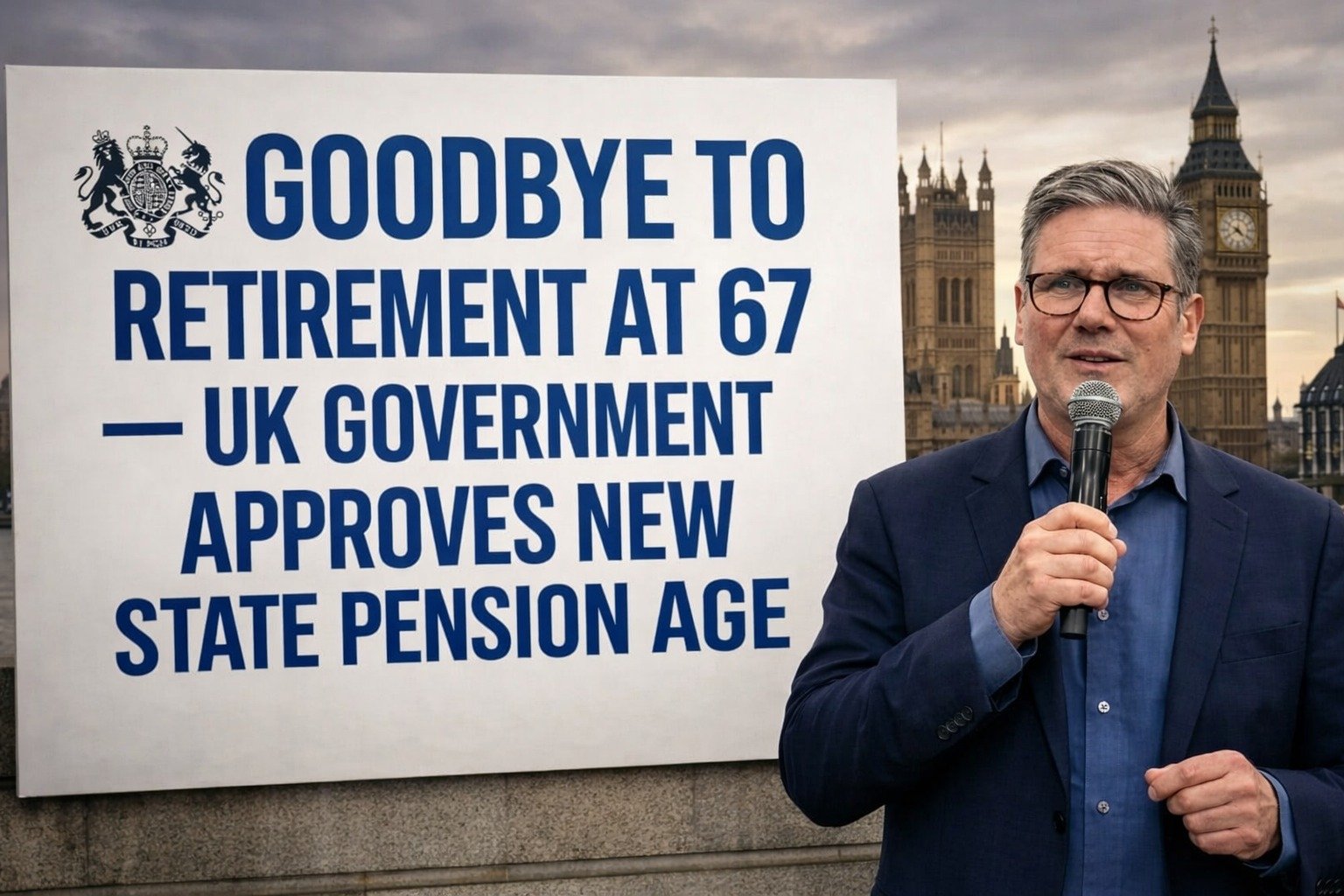
The UK government has confirmed a major step in the country’s long-planned pension reforms, formally approving the transition that will gradually raise the State Pension age from 66 to 67. The change has been discussed for several years, but the latest announcement makes clear that the rollout is now firmly in place and will affect millions of workers born in the early 1960s.
For many people approaching retirement, the update represents an important shift in how and when they will receive State Pension support. While the increase will not happen overnight, the transition has already begun for certain birth groups and will continue until the full move to age 67 is complete.
Understanding the timeline and how it affects different age groups is essential for anyone planning their retirement in the coming years.
Why the State Pension Age Is Rising
The UK government reviews the State Pension age periodically to ensure the system remains sustainable for future generations. One of the main reasons for raising the retirement age is the steady increase in life expectancy.
As people live longer, the State Pension must support retirees for more years than in previous decades. At the same time, the number of working-age taxpayers contributing to the National Insurance system has not increased at the same pace.
To keep pension spending manageable, policymakers have gradually increased the retirement age over time. The move from 66 to 67 is part of this long-term strategy aimed at maintaining the stability of the public pension system.
Officials say the changes are designed to protect the long-term future of the State Pension while balancing the financial pressures faced by the National Insurance fund.
The Gradual Transition From 66 to 67
The increase in pension age is not being applied to everyone at the same time. Instead, it is being introduced gradually, affecting people based on their date of birth.
Workers born between April 1960 and March 1961 will be the first group to experience the transition period. For these individuals, the age at which they can claim the State Pension will extend beyond their 66th birthday by several months.
For example, some people in this group may need to wait one or two additional months, while others will see the delay extend to several months depending on their birth date.
Those born in early 1961 and beyond will eventually reach the point where the State Pension age becomes 67.
By the time the rollout finishes in 2028, the new pension age of 67 will apply across the board for everyone reaching retirement age in the UK.
Who Will Be Affected First
The first people to feel the impact of the confirmed pension changes are those born in the early 1960s. For this group, the waiting period for State Pension payments will gradually extend beyond the traditional 66-year milestone.
Depending on the exact birth date, the additional waiting time could range from one month to nearly a full year.
For example, someone born in spring 1960 may see their pension age increase only slightly, while someone born closer to early 1961 could see a much longer delay before becoming eligible.
This staggered approach is designed to avoid sudden changes that could disrupt retirement planning for people close to pension age.
The Economic Reasons Behind the Decision
The government has repeatedly stated that the main motivation for increasing the State Pension age is financial sustainability.
Public pension spending currently represents a significant portion of government expenditure. Officials aim to keep State Pension costs within a manageable share of the country’s economic output.
One target often discussed in policy circles is maintaining pension spending below roughly six percent of the UK’s Gross Domestic Product.
As the large generation of workers born in the post-war years moves into retirement, raising the pension age has been identified as one of the key ways to keep spending within this range.
Without adjustments to retirement age, the government argues that the cost of the pension system could place increasing pressure on public finances in the future.
What Workers Should Do to Prepare
With the pension age gradually moving to 67, financial planners are encouraging workers to review their retirement strategies earlier than before.
Waiting an additional year for the State Pension could leave some people needing to cover a temporary income gap.
One of the most important steps is checking your National Insurance contribution record. Missing contribution years can reduce the amount of State Pension received, so identifying any gaps early may allow individuals to make voluntary contributions.
Workers are also advised to review their workplace or private pension arrangements. Many occupational pensions can be accessed earlier than the State Pension age, which may help bridge the gap during the transition period.
Flexible working arrangements, phased retirement, or part-time employment may also become more common as people adjust to the new retirement timeline.
Tools to Check Your Pension Age
To help people understand exactly when they will qualify for the State Pension, the government provides an online pension age calculator.
This tool allows individuals to enter their birth date and receive an accurate estimate of their pension eligibility date.
With the transition now officially confirmed, the calculator has been updated to reflect the latest timeline for the move toward age 67.
Using this tool can provide a clearer picture of when State Pension payments will begin and help individuals plan their retirement finances more effectively.
What Could Happen Next
Although the focus is currently on the shift to age 67, the government has also confirmed that future pension age reviews will continue.
The next review will examine whether the eventual increase to age 68 should be brought forward from its currently planned timeline.
However, officials have emphasised that any future changes would follow the principle of providing at least ten years’ notice before taking effect.
This approach is intended to ensure that workers have sufficient time to adjust their retirement savings and long-term financial plans.
The Bottom Line for UK Workers
The confirmation of the new State Pension age marks a significant milestone in the UK’s pension reform strategy.
While the increase to 67 will not affect everyone immediately, millions of workers born in the early 1960s will begin to experience the change as the transition unfolds.
For most people, the key message is preparation. Understanding your personal pension age, reviewing savings, and checking National Insurance contributions can help ensure a smoother transition into retirement.
As the pension system continues evolving, staying informed about policy updates will remain an important part of long-term financial planning for workers across the UK.