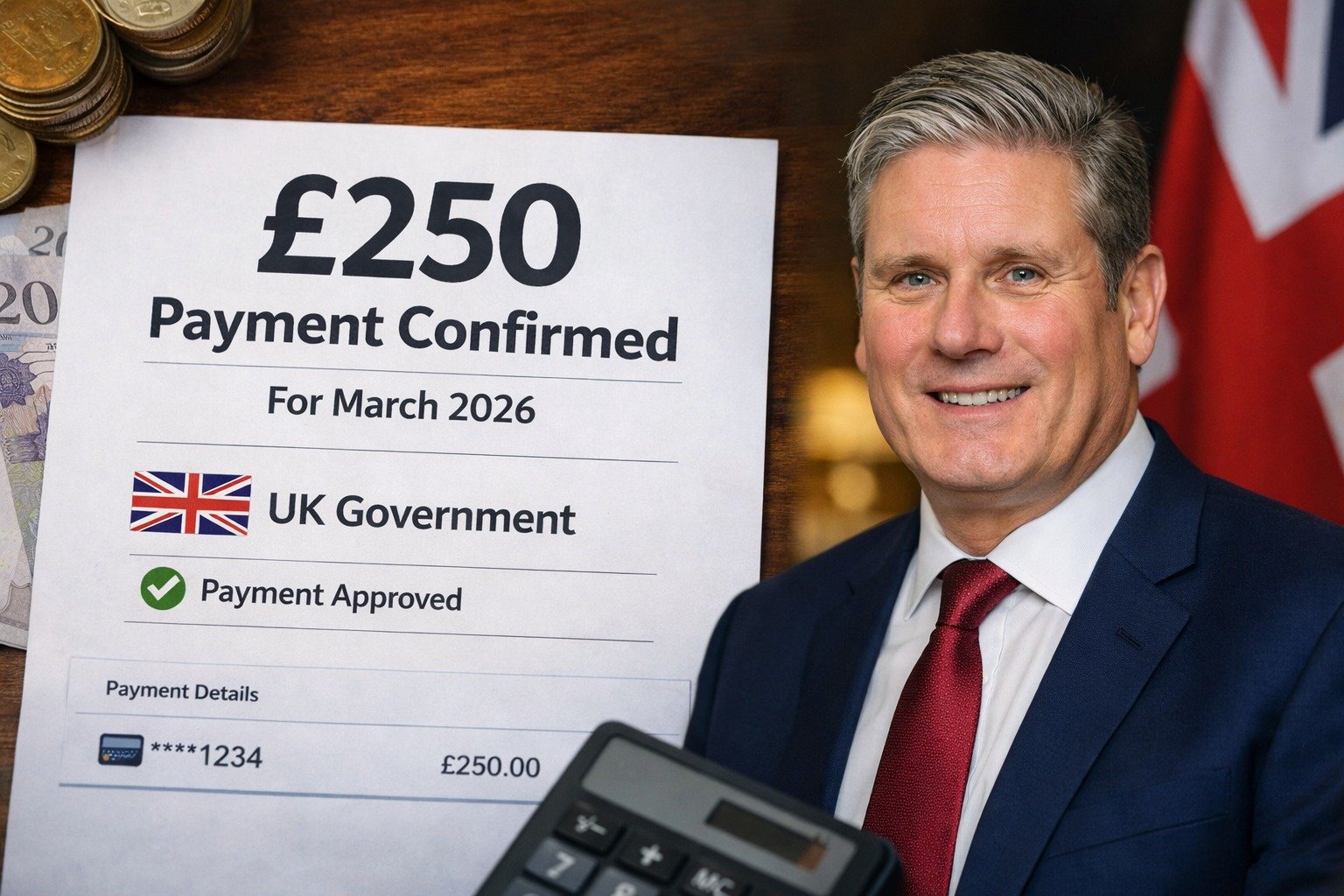
As the United Kingdom moves toward the end of the 2025–2026 financial year, the government has confirmed a new financial support measure aimed at helping households still facing high living costs. The Department for Work and Pensions has announced a £250 one-off payment scheduled for March 2026.
The support is designed to assist families during the final weeks of winter, when heating costs and everyday expenses often place additional pressure on household budgets. Although inflation has slowed compared with previous years, many households continue to face elevated energy bills and rising food prices.
This payment is intended to provide short-term financial relief before the new tax year begins in April and before annual benefit increases take effect.
Payment Dates for the March Support
According to the government announcement, the £250 payment will be distributed between 9 March and 27 March 2026.
The distribution period lasts roughly three weeks, allowing payments to be processed gradually across millions of eligible households. Unlike earlier cost-of-living payments that were sometimes rolled out over longer periods, this payment is intended as a targeted end-of-year support measure.
Most eligible individuals will receive the money automatically. Payments will appear in bank accounts with a reference including “DWP” followed by the recipient’s National Insurance number.
Because payments are issued in stages, some households may receive the money earlier than others during the rollout window.
Who Is Eligible for the £250 Payment?
Eligibility for the March 2026 payment depends on whether an individual was receiving certain benefits during a specific qualifying period.
To qualify, claimants must have been entitled to a qualifying benefit between 1 January 2026 and 15 February 2026.
If a person received one of the eligible benefits during that time frame, the payment will normally be issued automatically without any need to apply.
This system ensures the support reaches households that were already receiving assistance during the winter months.
Qualifying Benefits for the Payment
Several common UK benefits qualify households for the £250 support payment.
Eligible benefits include:
- Universal Credit
- Pension Credit
- Income-based Jobseeker’s Allowance
- Income-related Employment and Support Allowance
- Income Support
- Working Tax Credit
- Child Tax Credit
For Universal Credit claimants, eligibility usually depends on whether their assessment period ended within the qualifying timeframe.
Anyone who received one of these benefits during the relevant dates should expect the payment automatically.
Support for People Receiving Disability Benefits
Another key element of the March 2026 payment is the inclusion of individuals receiving disability-related benefits.
People with long-term health conditions or disabilities often face higher household costs. For example, they may require additional heating, specialist equipment, or greater energy usage to maintain comfortable living conditions.
The payment also includes recipients of:
- Personal Independence Payment (PIP)
- Disability Living Allowance (DLA)
- Attendance Allowance
However, households receiving multiple qualifying benefits will still receive only one £250 payment per household.
This rule helps ensure the funding is distributed across as many eligible households as possible.
Household Support Fund Remains Available
For people who do not qualify for the national £250 payment, additional help may still be available through the Household Support Fund (HSF).
This scheme allows local councils in England to distribute emergency support to residents facing financial hardship.
Assistance provided through the fund can include:
- Supermarket vouchers
- Help with energy bill arrears
- Direct financial grants
- Essential household supplies
Because local authorities manage the scheme independently, eligibility rules and payment amounts can vary depending on the council area.
Residents who believe they may qualify are encouraged to contact their local council to check what support may still be available.
Protecting Yourself from Payment Scams
Whenever government financial support is announced, fraud attempts often increase.
It is important to remember that the £250 cost-of-living payment does not require an application.
Eligible individuals will receive the payment automatically. Government departments will never ask people to provide personal or banking details by text message or email in order to receive the payment.
If someone receives a message asking them to click a link or enter sensitive information to claim the payment, it is very likely to be fraudulent.
Suspicious text messages can be reported by forwarding them to 7726, while suspected scams can also be reported through official government websites.
Why the Government Scheduled the Payment in March
The timing of the £250 support payment is closely linked to the UK’s financial calendar.
Benefit increases and pension uprating are scheduled to take effect in April 2026, when the new tax year begins. Until those increases arrive, many households may still experience financial pressure.
March can be a difficult period financially for several reasons:
- Winter heating bills remain high
- Grocery prices are still elevated
- Holiday debts from December may still be affecting budgets
Issuing the payment in March helps provide short-term financial relief before new benefit rates begin.
Energy Price Changes in April
Another factor influencing household budgets is the upcoming adjustment to the UK energy price cap.
The regulator Ofgem has confirmed that the energy price cap will fall by around 7 percent starting in April 2026.
This change is expected to reduce the average annual household energy bill by roughly £100 to £120.
Although this reduction provides some relief, energy costs remain significantly higher than they were before the energy crisis began several years ago.
The combination of the March payment and the lower energy price cap is intended to ease financial pressure as households move into the spring months.
What to Do If the Payment Does Not Arrive
Most eligible households should receive the £250 payment automatically during the rollout period.
However, if the payment has not arrived by 27 March 2026, claimants may be able to report the issue through the government’s Missing Payment service.
This online reporting system is expected to open on 30 March 2026.
Before that date, claimants are advised not to contact the DWP, as payments may still be in the process of being issued.
Checking bank statements regularly during the payment window is the best way to confirm whether the payment has been received.
Final Thoughts
The confirmed £250 payment for March 2026 represents another effort by the UK government to support households still experiencing cost-of-living pressures.
While the payment is temporary, it provides a helpful financial boost during the final weeks of winter, before new benefit and pension increases arrive in April.
For eligible households, understanding the qualifying criteria and payment schedule is important. By monitoring bank accounts during the rollout period and remaining alert to potential scams, recipients can ensure they receive the support they are entitled to.
As the new financial year begins, this targeted payment aims to help households transition into 2026 with greater financial stability.