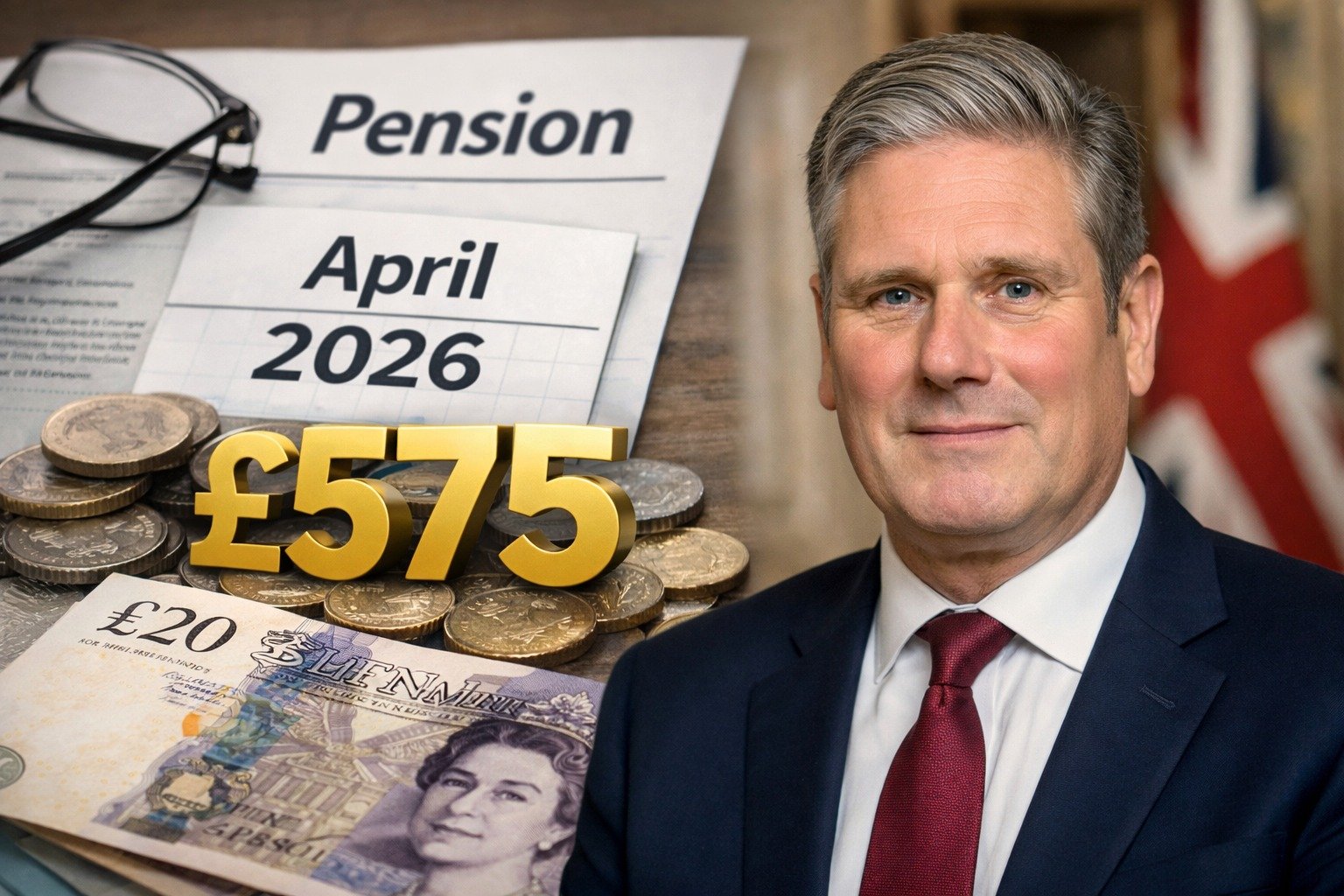
Millions of pensioners across the United Kingdom are set to receive a welcome financial boost in 2026. The Department for Work and Pensions (DWP) has confirmed that the State Pension will increase by around £575 per year starting in April 2026, offering additional support for retirees facing ongoing living costs.
This increase comes as part of the government’s long-standing Triple Lock policy, which is designed to protect pension incomes from inflation and ensure the value of retirement benefits keeps pace with economic changes.
For many older households who rely heavily on the State Pension as their main source of income, this adjustment will provide some welcome financial breathing room.
Understanding how the increase works and who qualifies is important as the new financial year approaches.
How the Triple Lock Drives the Increase
The £575 annual increase is not an arbitrary figure. It comes directly from the Triple Lock formula, a policy that determines how the State Pension rises each year.
Under the Triple Lock system, pensions increase by whichever of the following three figures is highest:
• Average earnings growth
• Inflation measured by the Consumer Price Index (CPI)
• A guaranteed minimum rise of 2.5%
For the April 2026 adjustment, average wage growth has been the strongest factor, pushing pension payments higher. As wages across the UK economy increase, pension payments rise to prevent retirees from falling behind financially.
This system was introduced to ensure that people who have paid into National Insurance throughout their careers continue to receive a pension that reflects changes in the wider economy.
New State Pension vs Basic State Pension
Not every pensioner receives the same payment, so the £575 increase will affect individuals differently depending on which State Pension system they are part of.
There are two main categories:
New State Pension
People who reached State Pension age on or after April 6, 2016 fall under the New State Pension system. This group receives the highest weekly payment and therefore benefits most from the increase.
With the 2026 adjustment, the full New State Pension is expected to rise from about £230 per week to roughly £241 per week.
Basic State Pension
Those who reached pension age before April 2016 receive the Basic State Pension. While their weekly payment remains lower, they will still receive the same percentage increase.
Even a modest weekly rise can make a noticeable difference to pensioners managing tight budgets.
What the £575 Increase Means Weekly
While the headline figure of £575 per year sounds substantial, most pensioners manage their finances weekly or monthly.
Broken down, the increase equates to roughly £11 extra per week for those receiving the full New State Pension.
For couples where both partners receive the full pension, this means an additional £22 per week entering the household budget.
Although this may not dramatically transform living standards, it can help cover rising everyday costs such as groceries, transport, broadband, or heating bills.
For retirees living on fixed incomes, even small increases can provide valuable financial stability.
Why April 2026 Matters
The timing of this increase is particularly significant. Over the past few years, the UK economy has faced several challenges including high inflation, energy price shocks, and lingering cost-of-living pressures.
During this period, many pensioners relied on temporary government support payments alongside their regular pension income.
However, many of those emergency support measures are gradually being phased out. As a result, the permanent increase to the State Pension becomes even more important.
Unlike one-off payments, this increase becomes part of the regular pension amount that retirees receive every year going forward.
Will Pensioners See a Real Increase in Income?
One key question many retirees ask is whether the increase will actually improve their financial situation.
If prices rise at the same rate as pension payments, the real purchasing power of pension income remains unchanged. However, forecasts suggest that inflation may begin stabilising in 2026.
If the wage-driven pension increase rises faster than inflation, pensioners could experience a genuine improvement in their spending power.
This is one of the core goals of the Triple Lock system: ensuring pensioners maintain their financial security even during periods of economic change.
Possible Tax Implications
While the pension increase is welcome news, some financial experts have warned about a potential side effect.
The UK Personal Allowance for income tax remains frozen at £12,570. As State Pension payments gradually increase each year, some pensioners may find themselves approaching or exceeding this tax-free threshold.
For pensioners who also receive a small workplace or private pension, the total income could push them into the taxable range.
This situation is sometimes referred to as “fiscal drag,” where frozen tax thresholds gradually bring more people into paying tax over time.
Although the additional tax may be relatively small, pensioners should keep track of their overall income.
Checking Your State Pension Entitlement
Most retirees will receive the new pension rate automatically from April 2026. The DWP usually sends letters confirming updated payment amounts ahead of the financial year.
However, receiving the full New State Pension typically requires 35 qualifying years of National Insurance contributions.
If someone has fewer qualifying years, they may receive a reduced amount.
Individuals approaching retirement can check their National Insurance record through the official government portal to see whether they qualify for the full pension or if they may wish to top up missing years.
Pension Credit Remains Important
For pensioners with very low incomes, the State Pension increase may not fully solve financial challenges.
This is where Pension Credit becomes important. Pension Credit acts as a top-up benefit designed to ensure older people have a minimum income level.
In addition to providing extra weekly payments, Pension Credit can also unlock access to other benefits such as:
• Help with heating costs
• Council tax reductions
• Free TV licences for those over 75
• Additional health and housing support
Many eligible pensioners do not realise they qualify for Pension Credit, meaning thousands miss out on extra financial help.
Debate Over the Triple Lock’s Future
Whenever a significant pension increase is announced, debate around the long-term sustainability of the Triple Lock quickly follows.
Supporters argue that the policy protects pensioners from poverty and ensures dignity in retirement. Critics, however, warn that rising pension costs could place pressure on government finances.
Despite these debates, the government has reaffirmed its commitment to maintaining the Triple Lock for the upcoming year.
The April 2026 increase is therefore expected to proceed as planned.
Planning Ahead for Retirement Income
With the upcoming pension increase confirmed, many retirees are beginning to review their financial plans for 2026.
Knowing that pension income will rise by roughly £575 annually allows households to better plan budgets for everyday expenses, home maintenance, or travel.
It can also be a good opportunity to review other retirement income sources such as workplace pensions, personal savings, or investment accounts.
A well-balanced retirement plan often combines multiple income streams, with the State Pension forming the foundation.
Final Thoughts on the 2026 Pension Increase
The confirmed £575 State Pension increase for April 2026 represents positive news for millions of retirees across the UK.
While it may not eliminate all cost-of-living concerns, the increase ensures that pension incomes continue to rise in line with economic conditions.
As the Triple Lock mechanism once again delivers a higher payment, the announcement highlights the government’s ongoing commitment to protecting the financial wellbeing of older citizens.
For pensioners relying on this income, the message is clear: a larger payment is on the way as the new financial year begins.