
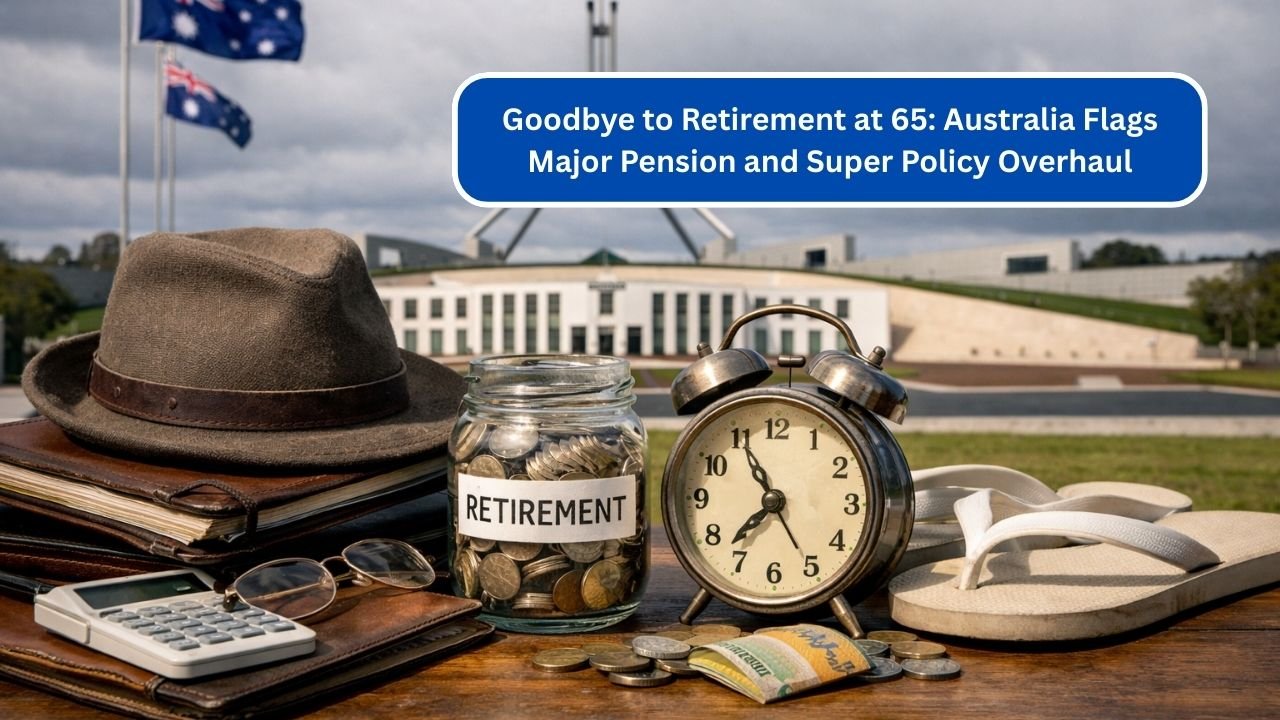
For generations, the age of 65 has symbolized retirement. It represented the moment when decades of work would finally give way to financial security, rest, and the freedom to enjoy later life. In Australia, as in many countries, that milestone has shaped expectations around pensions, superannuation, and long-term financial planning.
Now that long-standing benchmark is being reconsidered.
Policymakers and economic experts are increasingly discussing whether retirement at 65 remains realistic in a world where people are living longer and retirement savings must last decades. These discussions are prompting a broader rethink of how pension systems and superannuation rules should evolve.
While no single reform has permanently abolished retirement at 65, the direction of policy conversations suggests that future retirement systems may look very different from the traditional model.
Here is why retirement at 65 is under review, how pension and super policies may change, and what the future of retirement could look like for Australians.
Why Retirement at 65 Is Being Reconsidered
The traditional retirement age was created during a very different economic era.
When pension systems were first designed, life expectancy was significantly shorter. Many workers spent only a limited number of years in retirement, meaning pension programs were easier for governments to support financially.
Today, that reality has changed.
Australians are living longer and often remain healthier well into their later years. As a result, retirement periods can now extend for 20 to 30 years or more, placing greater pressure on pension budgets and retirement savings systems.
Several major factors are driving discussions about reform.
One is the rapid aging of the population. As the number of retirees grows, fewer working-age individuals are contributing to tax revenues that help fund government support programs.
Another challenge involves rising pension costs. Longer lifespans mean retirement benefits must stretch further, increasing the long-term financial commitment for governments.
Policymakers are also observing shifting workforce patterns. Many people now prefer flexible work arrangements or career changes later in life rather than a sudden exit from employment.
Together, these trends are pushing governments to explore whether the concept of retiring at a fixed age still fits modern economic realities.
Pension and Super Policy Changes Under Discussion
As these pressures grow, retirement policy is becoming a central topic of economic planning.
Potential reforms could reshape how pensions and superannuation function in the coming decades. While the details vary between proposals, several themes frequently appear in policy discussions.
One area of focus involves the age of eligibility for government pension benefits. Some experts suggest that gradually increasing access ages could help align retirement systems with longer life expectancy.
Another possible adjustment involves superannuation contribution frameworks. Policymakers may explore ways to encourage larger retirement savings during working years so individuals rely less heavily on government support later.
There is also growing discussion about retirement income strategies. Instead of relying mainly on pension payments, future retirees may increasingly depend on personal savings, investments, and structured super withdrawals.
Financial planners note that such reforms are often designed to maintain fairness across generations. Without adjustments, younger workers could face heavier financial burdens supporting an expanding retired population.
However, these proposals also raise important questions about work-life balance and the ability of older Australians to remain in the workforce.
How Retirement Planning May Need to Change
As retirement policies evolve, individuals may need to rethink how they approach long-term financial planning.
The traditional model assumed that a person would work until around 65, retire fully, and rely on a combination of superannuation and pension support for the remainder of their life.
Future retirement models may look more flexible.
Many experts suggest that workers could increasingly move toward phased retirement, gradually reducing working hours rather than stopping work entirely at a fixed age.
This approach allows individuals to maintain income while drawing smaller amounts from retirement savings, helping those funds last longer.
Extended career pathways may also become more common. Instead of retiring permanently, some Australians may choose part-time employment, consulting work, or entirely new career roles later in life.
Preparing for this possibility may involve several strategies.
Workers may focus more on building stronger personal savings, diversifying retirement income sources, and maintaining skills that allow them to remain employable for longer.
Understanding these possibilities early can help individuals adapt to changing retirement systems without feeling financially unprepared.
What the Future of Retirement Might Look Like
The broader discussion around retirement reflects changing attitudes about aging, work, and financial security.
Rather than marking retirement with a single age milestone, future systems may prioritize flexibility and gradual transitions.
Under emerging models, individuals might move into retirement through stages rather than a single event. Some may reduce working hours in their early sixties, shift to lighter roles, and fully retire later.
Personal savings and superannuation will likely play a larger role in supporting retirement income as governments attempt to balance pension sustainability.
Experts often highlight several trends shaping future retirement planning.
These include longer active lifestyles in later years, increased emphasis on financial independence, and growing awareness that retirement planning must begin earlier in life.
While the exact policy direction remains uncertain, one idea is becoming increasingly clear: retirement may become a flexible phase of life rather than a fixed starting point.
Key Differences Between Traditional and Emerging Retirement Models
| Retirement Factor | Traditional Approach | Emerging Approach |
|---|---|---|
| Retirement Age | Fixed around 65 | Flexible or gradually increasing |
| Pension Access | Earlier eligibility | Potentially delayed or adjusted |
| Work Pattern | Immediate full retirement | Gradual transition or part-time work |
| Savings Strategy | Pension reliance | Stronger personal savings focus |
| Retirement Lifestyle | Shorter retirement period | Longer active retirement |
Why Early Planning Matters More Than Ever
With retirement systems evolving, long-term planning is becoming increasingly important.
Financial experts often emphasize that the earlier individuals begin preparing for retirement, the more flexibility they will have if policies change in the future.
Building strong superannuation balances, understanding retirement income options, and remaining adaptable to shifting work patterns can help Australians maintain financial stability during later life.
The conversation about retirement at 65 does not necessarily mean that traditional retirement will disappear. Instead, it reflects an effort to modernize systems so they remain sustainable as societies age.
For many Australians, the biggest takeaway is simple: retirement may not begin at a single age anymore.
Instead, it could become a gradual transition shaped by personal savings, career choices, and evolving policy frameworks.