
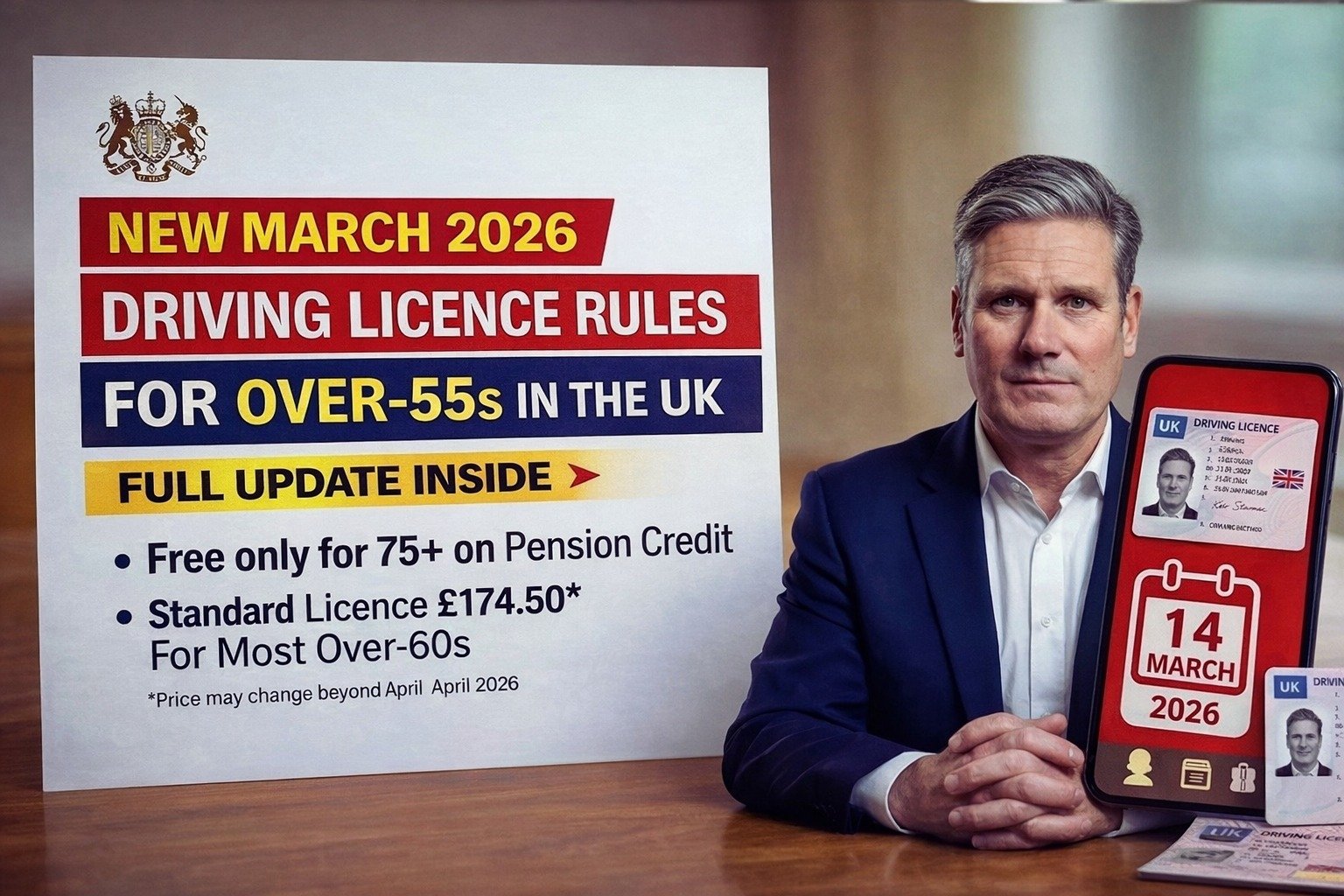
The UK government and the Driver and Vehicle Licensing Agency (DVLA) have introduced updated guidance and proposals affecting drivers aged 55 and over. These updates form part of the government’s broader road safety strategy aimed at keeping experienced motorists on the road while ensuring that safety standards evolve alongside modern driving conditions.
While the majority of drivers will not see dramatic changes to their licences overnight, the March 2026 update highlights several areas where requirements are becoming stricter. These include eyesight testing consultations, expanded medical reporting rules, and the continued rollout of digital driving licences.
For motorists approaching retirement age or entering their later driving years, understanding these developments is becoming increasingly important.
Why the Government Is Reviewing Driver Rules
Drivers aged 55 and above represent a growing portion of the UK’s driving population. Advances in healthcare mean people are staying active and mobile well into their later years, which has prompted the government to review how licensing rules support both independence and road safety.
The Department for Transport says the goal is not to restrict older drivers but to ensure that every motorist on the road meets consistent health and safety standards.
By focusing on preventative checks—such as eyesight assessments and earlier medical declarations—officials hope to identify potential risks before they lead to accidents.
The approach aims to balance public safety with the freedom that driving provides to millions of older residents.
Possible Changes to Eyesight Testing
One of the most talked-about aspects of the March 2026 update is the proposal for more formal eyesight testing requirements.
Currently, most drivers in the UK rely on a self-declaration system. This means drivers confirm they can read a standard vehicle number plate from 20 metres away when applying for or renewing a licence.
Under new proposals being discussed, the government is considering introducing mandatory eyesight checks carried out by qualified opticians or medical professionals.
These checks may eventually become part of the licence renewal process, particularly for older drivers. The aim is to ensure that vision standards are assessed clinically rather than relying entirely on self-reporting.
Police officers already have the power to conduct roadside number-plate tests, and the government is strengthening guidance around these checks as part of the safety strategy.
The Expansion of Digital Driving Licences
Another major milestone arriving in 2026 is the continued rollout of digital driving licences through the GOV.UK Wallet platform.
This new system allows drivers to store a digital version of their licence on their smartphone. Although physical plastic photocard licences remain valid, the government is encouraging motorists to adopt the digital format over the coming years.
For drivers over 55, the digital system may offer several advantages. It allows licence details to be updated instantly, including address changes or medical declarations.
The platform will also provide automatic reminders for photocard renewals, which must be completed every ten years.
Officials hope that by 2027, a large portion of the UK’s driving population will be using the digital licence system alongside traditional cards.
Stronger Rules for Medical Declarations
The March 2026 update also introduces stricter guidance around reporting certain health conditions to the DVLA.
Drivers have always been required to inform the DVLA if they develop a “notifiable” medical condition that could affect their ability to drive safely. However, the updated strategy places greater emphasis on reporting these conditions as soon as they appear rather than waiting until the next licence renewal.
The list of conditions receiving increased attention includes sleep apnea, early-stage cognitive conditions, and other medical issues that may affect concentration, reaction time, or awareness.
Declaring a medical condition does not automatically mean losing a driving licence. In many cases, the DVLA simply issues a shorter-term medical licence that requires periodic review.
The goal is to allow drivers to remain on the road safely while ensuring their health continues to meet legal standards.
Important Information for Drivers With Older Licence Categories
Drivers over 55 who hold additional licence categories—such as C1 for medium-sized vehicles or D1 for minibuses—should also review their entitlements carefully.
Many motorists who passed their driving test before 1997 automatically received these categories. However, they may be removed when drivers reach the age of 70 unless a specific medical assessment is completed.
This assessment involves submitting a medical report known as a D4 form, confirming that the driver meets the required health standards for operating larger vehicles.
For individuals who use motorhomes, minibuses, or other larger vehicles, understanding these requirements early can help avoid losing these entitlements later.
The Wider Road Safety Strategy
The March 2026 updates form part of a long-term government strategy to improve road safety across the UK.
Officials have set ambitious targets to significantly reduce serious road accidents and fatalities over the coming decade.
In addition to the licensing updates, the government is also reviewing other potential measures, including drink-drive limits and modernised enforcement tools.
These proposals are designed to ensure that road safety policies keep pace with changing technology, vehicle standards, and driving patterns.
What Drivers Over 55 Should Do Now
For most drivers aged 55 and above, the key message is to stay informed and proactive.
Checking that your photocard licence is valid, ensuring your DVLA records are accurate, and reporting any relevant health conditions are simple steps that can help maintain compliance.
Drivers may also wish to schedule regular eyesight checks with an optician, even before formal testing requirements are introduced.
Keeping up to date with official DVLA guidance will ensure that drivers can continue enjoying the independence of driving while meeting the evolving standards of UK road safety.
The Bottom Line
The March 2026 driving licence update does not impose immediate restrictions on older motorists, but it does signal a gradual shift toward stronger health monitoring, digital licensing systems, and improved safety checks.
For drivers over 55, these changes are designed to support safe driving for longer while helping authorities maintain high safety standards on UK roads.
By staying aware of new requirements and maintaining regular health checks, experienced drivers can continue to travel confidently and legally for many years to come.