
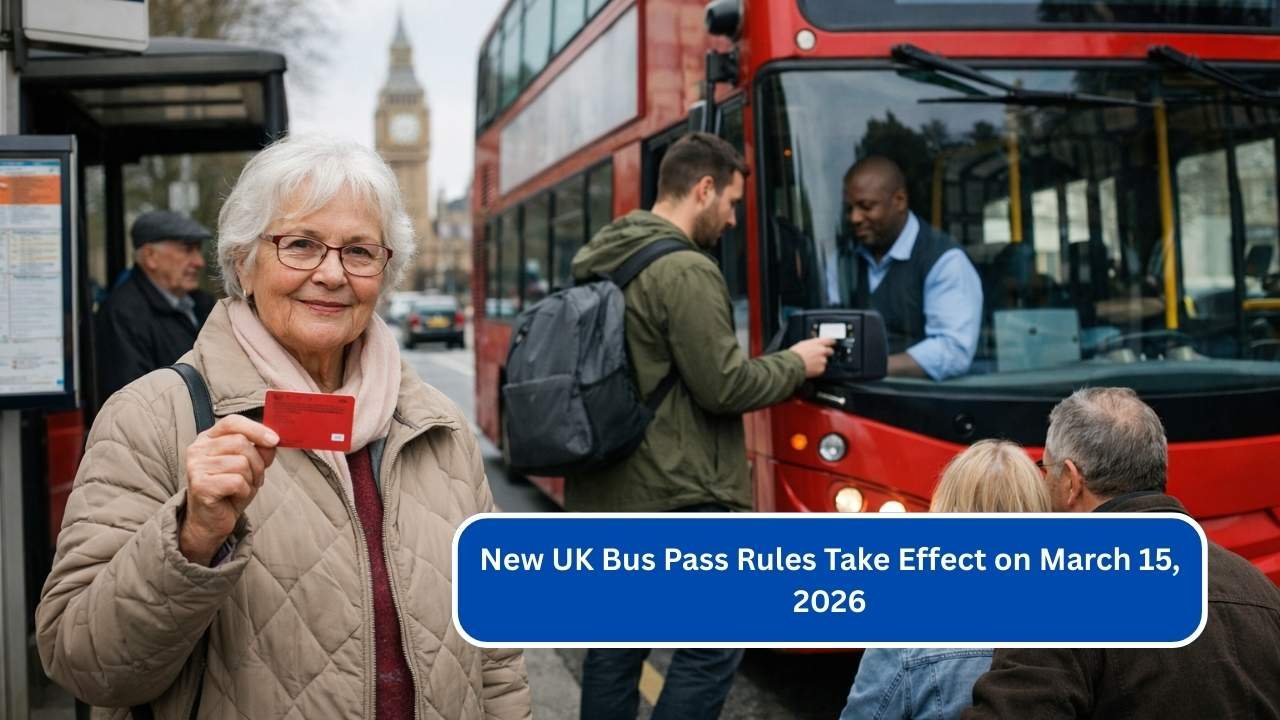
Free bus travel has long been an important benefit for millions of people across the United Kingdom. For many older residents, concessionary bus passes provide much more than a way to travel—they help maintain independence, support social connections, and reduce everyday living costs.
However, from March 15, 2026, several updates have been introduced to the UK’s concessionary travel system. These changes affect eligibility ages, travel time restrictions, digital verification systems, and renewal procedures.
For people approaching retirement age or already using a bus pass, understanding these updated rules is essential to avoid unexpected travel issues.
Eligibility Age Changes in England
One of the most significant updates introduced in 2026 concerns the eligibility age for older person bus passes in England.
In the past, many people assumed that turning 60 automatically allowed them to receive free bus travel. While this rule still applies in some parts of the UK, England has gradually aligned bus pass eligibility with the State Pension age.
Beginning March 15, 2026, the qualifying age in England is moving closer to 67. This means some individuals who expected to qualify earlier may now need to wait longer before receiving their concessionary pass.
People born between 1959 and 1961 are among those most affected by the change. Instead of becoming eligible at age 66, many will now need to wait until they reach age 67 before applying.
For those who planned retirement budgets around free public transport, this adjustment may require reconsidering travel costs during the transition period.
Different Rules Across the UK
The United Kingdom does not operate a single nationwide bus pass system. Instead, transport policies are managed separately by regional governments, which means eligibility rules vary depending on where a person lives.
Scotland, Wales, and Northern Ireland
In these regions, concessionary travel eligibility remains largely unchanged. Residents can typically apply for a free travel pass once they reach the age of 60.
These schemes are funded by devolved governments and continue to offer generous access to bus travel for older residents.
London
London operates its own transport concession system through the 60+ London Oyster Photocard. This program is funded by Transport for London and allows residents aged 60 or older to travel free on buses, the Underground, and most rail services within the capital.
England Outside London
In most English regions outside London, eligibility is now closely linked to the State Pension age. As the pension age rises, bus pass eligibility increases accordingly.
Residents should check the official government eligibility calculator or contact their local council to confirm the exact age at which they qualify.
Updated Travel Time Restrictions
Another important update introduced in 2026 involves travel times under the English National Concessionary Travel Scheme.
Under the current rules, free bus travel in England is typically available during these hours:
- Weekdays: 9:30 AM to 11:00 PM
- Weekends and public holidays: usually unrestricted
The purpose of this restriction is to reduce overcrowding during peak commuting periods when buses are heavily used by workers and students.
Some councils previously allowed travel earlier in the morning, but many authorities are now strictly enforcing the 9:30 AM start time.
Passengers who need to travel earlier for work or medical appointments may still need to pay the normal fare.
Greater Manchester’s Flexible Travel Policy
While some areas are tightening enforcement of peak-hour restrictions, Greater Manchester has introduced additional flexibility through its Bee Network transport system.
Under this program, eligible bus pass holders can travel at any time of day, including during busy morning hours.
This approach allows older residents to travel freely without waiting until mid-morning, making it easier to attend appointments, volunteer activities, or early events.
The Bee Network demonstrates how local authorities can expand concessionary travel benefits beyond the national minimum standard.
Residents in cities such as Liverpool, Leeds, and Birmingham may want to check whether their local transport authorities offer similar enhancements.
Digital Bus Pass Technology Expands
Another major development in 2026 is the increasing use of digital bus passes.
Local councils and transport authorities are encouraging residents to store their bus passes on smartphones using official travel apps. While traditional plastic cards will still be available, buses are now equipped with upgraded digital readers connected to central databases.
These new systems can automatically detect:
- Expired concessionary passes
- Changes in eligibility status
- Incorrect or outdated information
If a pass is no longer valid, the reader will display a warning signal and drivers will usually be unable to override the system manually.
The digital upgrade is designed to improve security, reduce fraud, and simplify verification for bus operators.
Changes to Disabled Passenger Bus Passes
Passengers who qualify for concessionary travel due to a disability will also see updates to the verification process.
Government departments have improved data-sharing systems between the Department for Work and Pensions and local councils. This means individuals receiving Personal Independence Payment or holding a Blue Badge may have their eligibility confirmed automatically.
As a result, some applicants will no longer need to provide as much paperwork when applying for or renewing their passes.
However, stricter requirements now apply to Companion Passes, which allow a carer or support person to travel free alongside the disabled passenger.
Authorities may now request medical evidence confirming that a companion is necessary for safe travel.
£2 Bus Fare Cap Extended
For residents in England aged 60 to 67 who are not yet eligible for a free bus pass, the government has extended the £2 single bus fare cap throughout 2026.
Although it does not provide completely free travel, the fare cap helps keep bus journeys affordable during the waiting period before concessionary eligibility begins.
Passengers should be aware that not all bus operators participate in the program. Checking for the £2 fare cap label on buses or on operator websites before traveling is recommended.
Bus Pass Renewal Rules in 2026
Another change affecting many passengers involves bus pass renewals.
Unlike driving licences, which often remain valid for ten years, many concessionary bus passes expire after three to five years.
From March 2026, councils will send fewer automatic reminders when passes are approaching expiry. This means cardholders must take greater responsibility for checking their card’s expiration date.
Transport authorities recommend submitting renewal applications at least six weeks before the expiry date to avoid travel disruptions.
Most renewals can now be completed online within minutes, although paper applications remain available at council offices and local libraries.
Final Thoughts
The UK’s concessionary bus pass system is evolving in 2026 as authorities introduce new eligibility rules, digital technology, and updated verification procedures.
While the higher qualifying age in England may delay access for some residents, the updated system aims to maintain long-term sustainability while improving efficiency and security.