
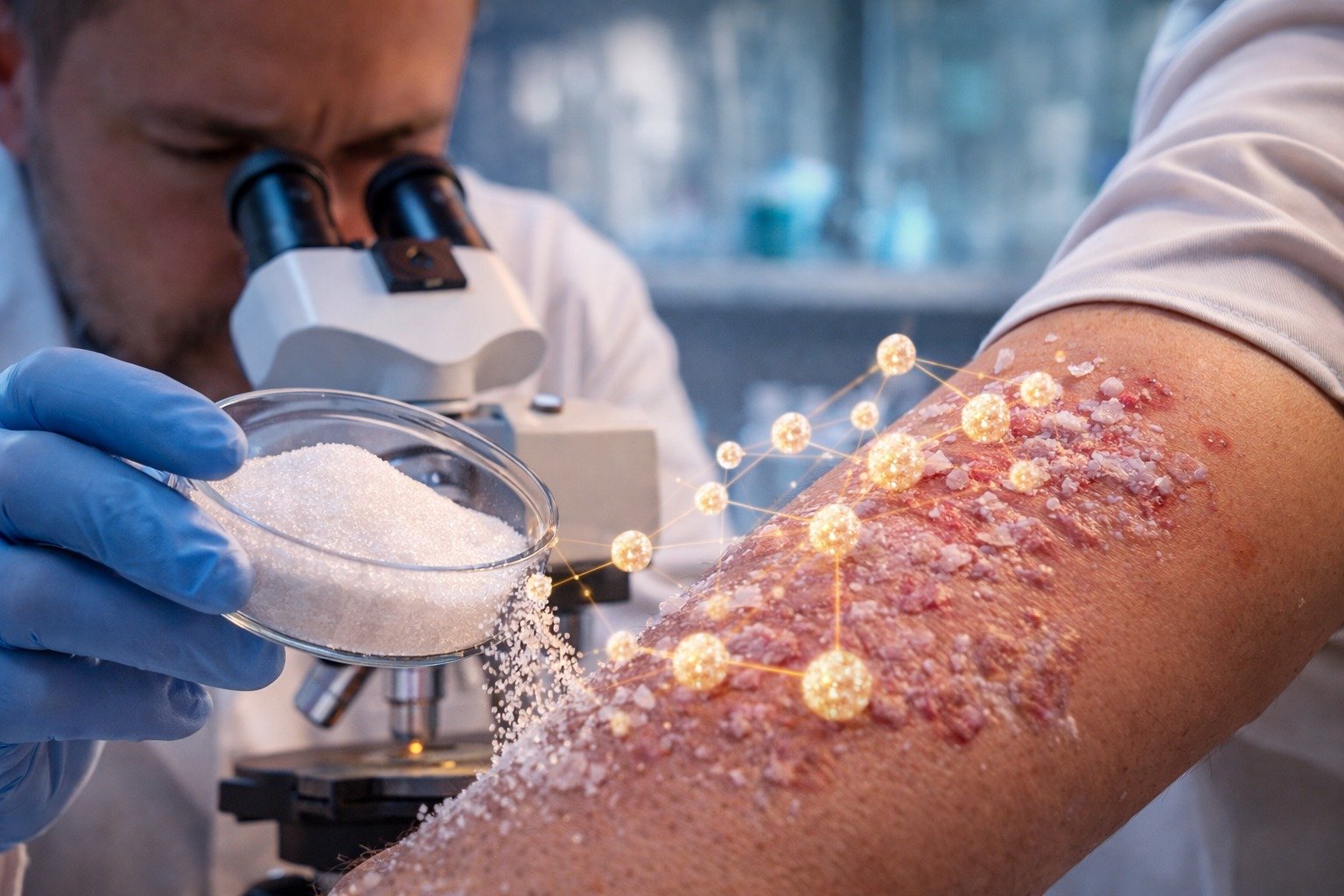
Psoriasis is a chronic skin condition that affects millions of people worldwide. Known for causing red, scaly patches on the skin, the disease has long been linked to immune system activity and inflammation. While treatments have improved over the years, scientists continue searching for deeper insights into what actually triggers the condition at a biological level.
Recently, researchers have discovered a surprising factor that may play a role in psoriasis: a unique sugar-related mechanism inside the body’s cells. This finding could help scientists better understand how the disease develops and may eventually lead to new treatments.
Understanding Psoriasis and Its Impact
Psoriasis is an autoimmune condition in which the immune system mistakenly attacks healthy skin cells. Normally, skin cells grow and shed in a cycle that takes about a month. In people with psoriasis, however, this process speeds up dramatically, causing cells to accumulate on the surface of the skin.
The result is thick, inflamed patches that can appear on the scalp, elbows, knees, back, and other parts of the body. These areas may itch, burn, or crack, making everyday life uncomfortable for many patients.
Beyond the physical symptoms, psoriasis can also affect mental health. Many individuals experience stress, anxiety, or reduced confidence due to visible skin changes.
Because of these challenges, scientists have been working to understand every biological pathway involved in the disease.
A New Focus on Cellular Sugars
In recent studies, researchers began investigating a type of sugar molecule that exists inside cells. These sugars are not the same as the sugars found in food or beverages. Instead, they are part of complex chemical structures that help cells communicate and function properly.
One specific process, known as glycosylation, allows sugar molecules to attach to proteins. This process influences how proteins behave, how cells respond to signals, and how the immune system reacts to potential threats.
Scientists have now discovered that abnormal glycosylation may be linked to psoriasis-related inflammation.
How Sugar Molecules Affect Skin Cells
The new research suggests that certain sugar molecules may regulate how skin cells grow and respond to inflammation. When this sugar-based system functions normally, it helps keep skin cell production balanced.
However, when the process becomes disrupted, it can lead to excessive skin cell growth — one of the main characteristics of psoriasis.
Researchers found that altered sugar signaling inside immune cells may trigger an overactive inflammatory response. This response sends signals that cause skin cells to multiply faster than they should.
As a result, the skin develops the thick, scaly patches commonly seen in psoriasis patients.
The Immune System Connection
The immune system plays a major role in psoriasis, and the newly discovered sugar mechanism appears to interact directly with immune pathways.
Scientists observed that sugar modifications on proteins can influence how immune cells release inflammatory signals. When these signals become too strong or uncontrolled, they may contribute to the chronic inflammation seen in psoriasis.
This discovery is important because it highlights a previously overlooked layer of immune regulation.
Instead of focusing only on immune cells themselves, researchers are now examining how cellular chemistry — including sugar molecules — controls immune behavior.
Why This Discovery Matters
Understanding the sugar-related mechanism behind psoriasis could open the door to new treatment strategies. Current therapies often aim to reduce inflammation or suppress certain immune pathways.
While these treatments can be effective, they do not always address the deeper biological triggers that start the inflammatory cycle.
If scientists can learn how to regulate the sugar processes involved in glycosylation, they may be able to develop therapies that correct the imbalance before inflammation becomes severe.
In other words, future treatments might focus on restoring normal cellular signaling rather than simply controlling symptoms.
Potential for Future Therapies
Researchers are now exploring whether drugs could target the enzymes that control glycosylation. By adjusting how sugar molecules attach to proteins, it may be possible to reduce abnormal immune responses.
This type of approach could provide a more precise way to manage psoriasis and potentially reduce side effects compared to broader immune-suppressing medications.
Although these treatments are still in early stages of research, the discovery offers promising possibilities for the future of psoriasis care.
What This Means for Patients
For people living with psoriasis, scientific discoveries like this bring hope for better understanding and improved therapies. While the condition is currently manageable for many patients, it remains a lifelong disease that can flare up unpredictably.
Each new breakthrough helps scientists build a clearer picture of how psoriasis develops inside the body.
By studying cellular mechanisms such as sugar-based signaling, researchers are uncovering new clues that could eventually transform treatment options.
The Bigger Picture of Skin Research
The implications of this discovery may extend beyond psoriasis. Cellular sugar processes play a role in many biological functions, including immune regulation, inflammation, and tissue repair.
This means that similar mechanisms might be involved in other inflammatory diseases as well.
As researchers continue exploring the relationship between sugar molecules and immune activity, they may uncover insights that apply to multiple conditions affecting the skin and immune system.
Conclusion
The discovery of a sugar-related mechanism behind psoriasis represents an exciting step forward in medical research. By revealing how cellular sugars influence immune responses and skin cell growth, scientists have uncovered a new layer of complexity in the disease.
While more studies are needed to fully understand the process, this finding could eventually lead to innovative treatments that target the root causes of psoriasis rather than just its symptoms.
For millions of people affected by this chronic condition, advancements like this bring renewed optimism that better solutions may be on the horizon.