
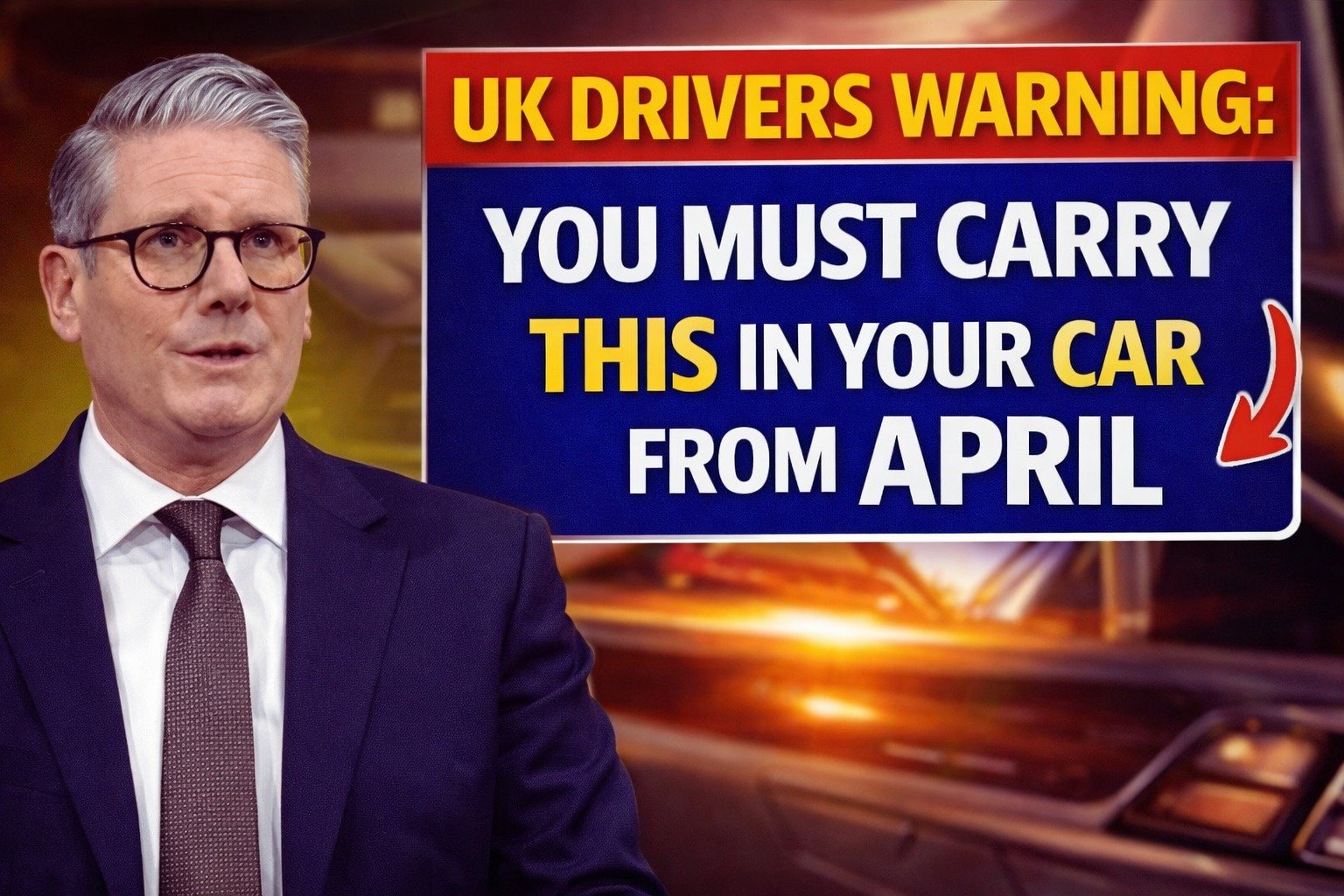
Drivers across the United Kingdom are being urged to review what they carry in their vehicles as new compliance guidance comes into focus for April 2026. The Driver and Vehicle Licensing Agency (DVLA) has highlighted several changes affecting how motorists prove their eligibility to drive, particularly for those with medical conditions, licence restrictions, or recently renewed documents.
While the majority of everyday drivers will not face new mandatory items for their glovebox, certain groups will now need to carry documentation or proof of status when behind the wheel. The changes are part of broader road safety measures and increased digital enforcement designed to ensure drivers remain compliant with licensing rules.
Understanding what the new guidance means—and whether it applies to you—can help drivers avoid fines, delays, or insurance complications during roadside checks.
Why the April 2026 Changes Are Happening
Over the past decade, the UK has steadily shifted toward digital records for driving licences, vehicle tax, and insurance. Police officers now rely heavily on real-time databases and Automatic Number Plate Recognition systems to check a driver’s legal status.
However, the DVLA says that some situations still require drivers to carry documentation to prove they are legally allowed to drive under special circumstances.
The April 2026 changes focus mainly on drivers whose licences include restrictions, temporary entitlements, or ongoing medical reviews. In these cases, carrying proof of the terms of the licence may now be necessary if stopped by authorities.
The aim is to ensure drivers clearly understand any limits placed on their driving and can present evidence of those limits when required.
Drivers With Medical or Restricted Licences
One of the biggest groups affected by the updated guidance includes drivers who have medical restrictions attached to their licences.
If the DVLA has granted a restricted licence due to health conditions or age-related assessments, drivers may now be required to carry documentation outlining the conditions of their licence.
This can include drivers who have been issued a restricted-distance licence, which limits how far they can travel, or drivers who must follow specific conditions related to eyesight, medication, or physical mobility.
In such cases, motorists should keep a copy of the licence summary or official DVLA documentation in the vehicle. If stopped by police, the document may be requested to confirm the driver’s compliance with their licence conditions.
Failure to provide the information could lead to complications during roadside checks and, in some situations, financial penalties.
Section 88 Drivers Must Carry Evidence
Another group affected by the guidance is drivers operating under what is known as “Section 88 entitlement.”
Section 88 allows drivers to continue driving while their licence application or renewal is being processed by the DVLA. This typically applies to people waiting for a licence renewal following a medical assessment or age-related review.
Although Section 88 allows driving legally during the waiting period, drivers must be able to prove they have submitted their application and that their doctor has confirmed they are fit to drive.
Motorists in this situation are advised to carry copies of their licence application confirmation and any relevant medical certification in their vehicle.
Without this documentation, drivers may struggle to demonstrate their legal entitlement during roadside checks.
Digital Licences and the GOV.UK Wallet
April 2026 also marks a broader rollout of digital driving licence services through the GOV.UK Wallet system. This platform allows motorists to access a digital version of their driving licence through a smartphone.
Although drivers are not legally required to rely solely on a digital licence, the government is encouraging its use as a convenient way to verify identity, address details, and licence status.
Digital licences can help officers quickly confirm a driver’s information during traffic stops, reducing the need for paper records in many cases.
However, motorists must still ensure their DVLA records are fully up to date. If your address has changed or your photocard licence has expired, digital records may show your licence as non-compliant.
Electric Vehicle Owners Face New Paperwork
Another area receiving attention in April 2026 involves electric vehicle owners. As electric cars begin to lose some of their previous tax exemptions, the new tax year introduces additional requirements related to Vehicle Excise Duty.
Drivers of certain electric vehicles—especially those with higher purchase prices—may now fall under the Expensive Car Supplement rules.
For this reason, motorists are being advised to keep documentation related to their vehicle’s purchase price and tax status available if questions arise about their Vehicle Excise Duty category.
Although police officers can access tax records electronically, having proof of payment or vehicle details available may help resolve disputes quickly.
Stronger Enforcement of Eyesight Standards
Vision standards for drivers are also receiving renewed attention in 2026. UK law already requires drivers to be able to read a number plate from 20 metres away, but enforcement of this rule is becoming stricter.
Police officers are being encouraged to conduct more roadside eyesight checks to ensure drivers meet the legal standard.
If a driver fails a roadside vision test and cannot demonstrate they have corrective lenses available, authorities may take immediate action to prevent further driving.
For this reason, drivers who rely on glasses or contact lenses are strongly advised to keep a spare pair in their vehicle at all times.
How Drivers Can Prepare for April
With the new enforcement measures approaching, motoring organisations recommend conducting a simple vehicle compliance check.
Start by confirming that your photocard driving licence is still valid. Photocard licences must be renewed every ten years, and the expiry date can be found on the front of the card.
Drivers should also ensure their DVLA address information is up to date and that any medical conditions have been reported correctly.
If your licence includes restrictions or you are waiting for a renewal decision, keeping relevant paperwork in your vehicle can help avoid problems during roadside checks.
The Bottom Line for UK Motorists
Despite warnings circulating online, most UK drivers will not suddenly need to carry new items in their cars starting in April 2026.
The guidance mainly applies to motorists with restricted licences, medical reviews, or temporary driving entitlements. For these drivers, carrying proof of their licence status may now be necessary.
At the same time, the government is expanding digital licence options and improving automated enforcement systems to identify compliance issues more quickly.
For everyday drivers, staying compliant is straightforward: keep your licence up to date, ensure DVLA records are accurate, and carry any required documents if your driving status includes special conditions.