
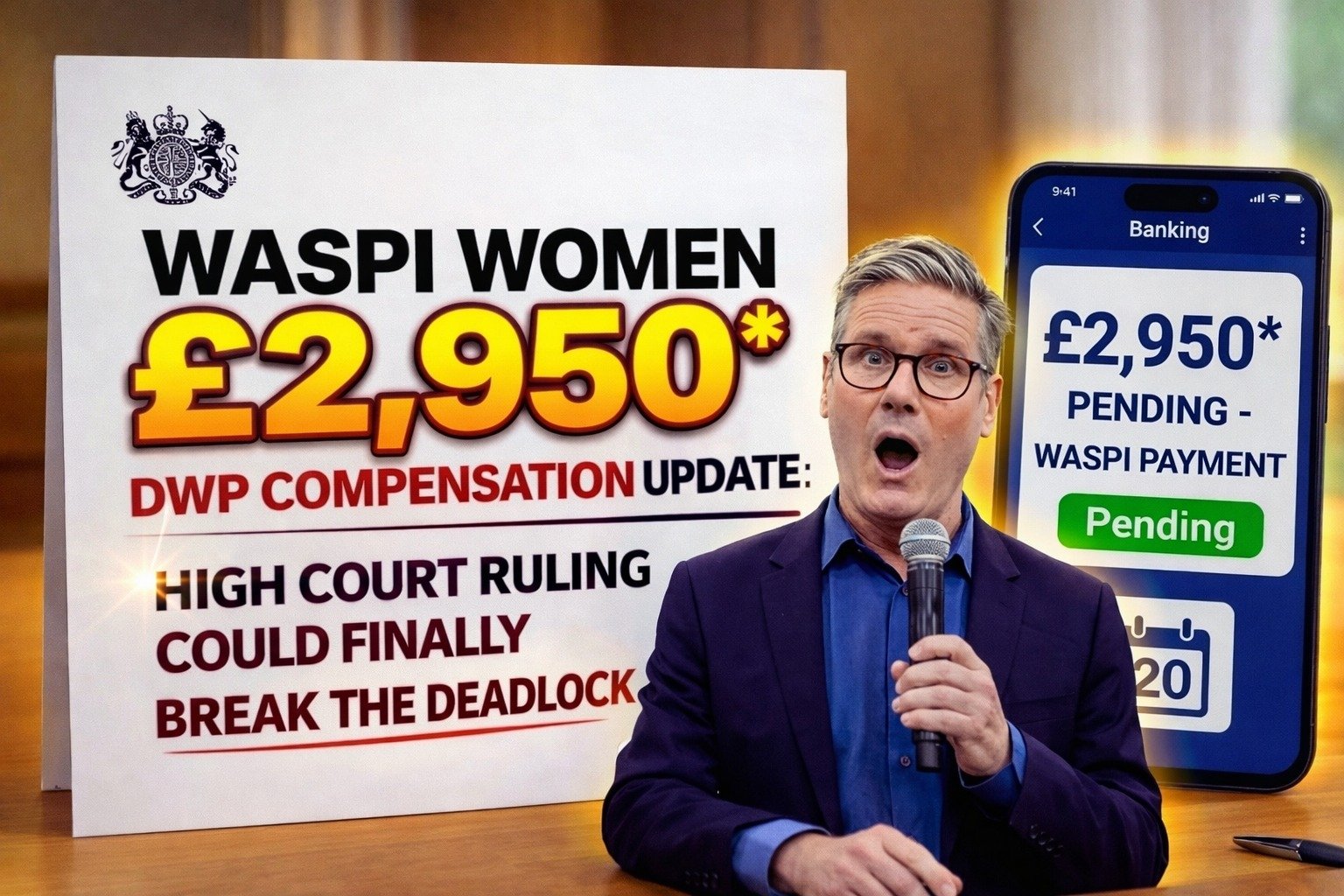
The long-running campaign for compensation by WASPI (Women Against State Pension Inequality) has reached another important stage as legal challenges continue over the way state pension age changes were communicated. Millions of women born in the 1950s say they were not properly informed when their retirement age increased, leaving them little time to prepare financially.
Now, a possible High Court review and renewed legal pressure have brought the issue back into the spotlight. Campaigners believe the case could eventually lead to compensation payments, with some estimates suggesting affected women could receive up to £2,950 under recommendations made by the Parliamentary and Health Service Ombudsman.
Although no payment scheme has been confirmed yet, the ongoing legal developments have raised hopes that the dispute may finally move toward resolution.
How the WASPI Campaign Began
The controversy dates back to major pension reforms introduced by the UK government to equalise the state pension age for men and women.
Historically, women were able to claim the State Pension at age 60, while men had to wait until age 65. To bring the system into line with equality laws and rising life expectancy, the government introduced changes that gradually increased women’s pension age.
Between 2010 and 2020, the pension age for women rose from 60 to 65 and later increased further to 66, matching the retirement age for men.
While the policy itself was widely seen as necessary, the way it was communicated became the focus of controversy. Many women born in the 1950s say they were given little or no notice that their retirement age was being pushed back.
For those who had already planned to stop working at 60, the sudden delay created serious financial and personal difficulties.
Millions of Women Affected by the Changes
Campaign groups estimate that around 3.6 million women born in the 1950s were affected by the pension age reforms.
Many say they discovered the changes only a few years before they expected to retire. Some received letters from the Department for Work and Pensions much later than expected, while others claim they never received official communication at all.
The WASPI campaign was formed to demand fairness and compensation for the financial hardship caused by the lack of timely information.
It is important to note that the campaign does not challenge the decision to equalise the pension age itself. Instead, the focus is on how the changes were communicated and whether the government failed in its duty to inform those affected.
Ombudsman Findings and Suggested Compensation
The Parliamentary and Health Service Ombudsman investigated complaints about the Department for Work and Pensions’ communication of the pension age changes.
After reviewing the case, the Ombudsman concluded that there had been maladministration in the way the government communicated the reforms.
In response, the Ombudsman recommended that Parliament consider compensation for the affected women.
The suggested compensation levels were based on the Ombudsman’s scale for injustice and administrative failure.
Possible payments discussed under this guidance range between approximately £1,000 and £2,950 per person, depending on the severity of the impact experienced.
The £2,950 figure is often cited by campaigners as the maximum level of compensation that could be awarded under the Ombudsman’s recommendations.
Government Position on Compensation
Despite the Ombudsman’s findings, the UK government has repeatedly declined to introduce a nationwide compensation scheme.
Ministers have acknowledged that some letters informing women about pension age changes were sent later than planned. However, they argue that the overall policy was widely publicised and that most women were aware of the changes before retirement.
Another factor influencing the government’s decision is the potential cost of compensation. Officials have suggested that paying all affected women could cost up to £10 billion.
Because of these financial concerns, ministers have stated that introducing a large-scale compensation scheme would not represent the best use of public funds.
This position has led to strong criticism from campaigners, who say the government has failed to address the injustice identified by the Ombudsman.
The High Court Legal Challenge
With political discussions reaching a stalemate, the WASPI campaign has turned to the courts in an attempt to challenge the government’s refusal to introduce compensation.
Lawyers representing the group have asked the High Court to review whether the government properly considered the Ombudsman’s recommendations when rejecting compensation.
If the court finds that the government’s decision-making process was flawed, ministers could be required to reconsider the issue and provide a new response.
While the court cannot directly order compensation payments, a ruling in favour of the campaign could force the government to revisit the issue.
For many campaigners, the legal challenge represents one of the final opportunities to push the government toward a settlement.
Possible Outcomes if Compensation Moves Forward
Although no compensation programme has been officially approved, analysts have discussed several possible scenarios if the government eventually agrees to payments.
One possibility is a flat-rate payment offered to all eligible women affected by the communication failures.
Another option could involve a tiered compensation system, with larger payments offered to those who experienced the most severe financial hardship.
Some proposals suggest that the maximum payment could reach around £2,950, in line with the Ombudsman’s highest recommended level.
Campaign groups have expressed a preference for a straightforward system that avoids complex eligibility checks or lengthy application procedures.
What Affected Women Should Do Now
At the moment, there is no official system open for compensation claims.
Women who believe they were affected by the pension age changes are advised to stay informed and monitor updates from reliable sources.
Keeping records related to pension age notifications or past correspondence from the Department for Work and Pensions may also be helpful if a compensation scheme is eventually introduced.
Many campaigners also encourage affected individuals to contact their local Members of Parliament to raise awareness of the issue.
The Ongoing Debate Over WASPI Compensation
The WASPI dispute remains one of the most prominent pension controversies in the UK. Millions of women continue to argue that they were treated unfairly when pension age reforms were introduced without sufficient notice.
Although the government has so far rejected compensation proposals, the High Court challenge has revived public attention on the issue.
If the legal review forces ministers to reconsider their position, the possibility of payments of up to £2,950 could return to the political agenda.
For now, affected women and campaign groups continue to watch closely as the legal process unfolds, hoping that the next stage of the dispute may finally bring a resolution to a debate that has lasted for more than a decade.