
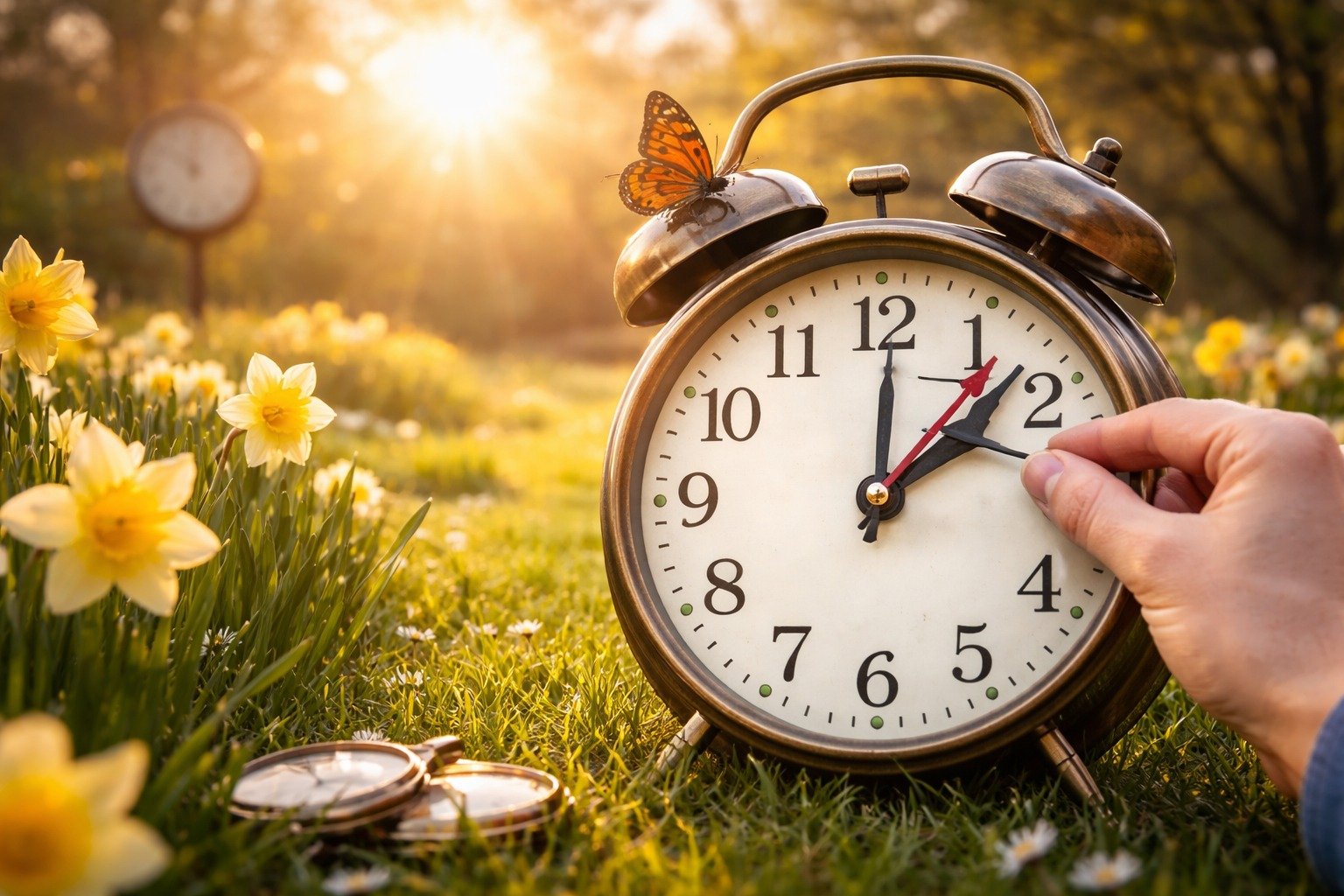
Every spring, people across the United Kingdom adjust their clocks forward by one hour as the country shifts from Greenwich Mean Time (GMT) to British Summer Time (BST). While the change may seem routine, it affects daily schedules, daylight hours, and even sleep patterns for millions of people.
The tradition, known as Daylight Saving Time (DST), has been observed in the UK for more than a century. The goal is simple: make better use of daylight during the longer days of spring and summer.
But when exactly do the clocks change, and why does the UK still follow this seasonal time adjustment?
When the Clocks Go Forward in the UK
In the United Kingdom, the clocks go forward one hour at 1:00 a.m. GMT on the last Sunday in March each year.
When the change happens, clocks immediately jump to 2:00 a.m. BST, effectively moving an hour of daylight from the morning to the evening.
For example, if sunrise normally occurs at 6:30 a.m., after the change it will occur at 7:30 a.m. Instead, the extra hour of light appears in the evening.
In 2026, the clocks will go forward on Sunday, March 29.
This shift marks the beginning of British Summer Time, which continues through the warmer months until the clocks move back again in autumn.
When the Clocks Go Back
The UK does not stay on Daylight Saving Time permanently. Later in the year, the clocks return to their original time.
The clocks go back one hour at 2:00 a.m. BST on the last Sunday in October, returning the country to Greenwich Mean Time.
In 2026, this change will occur on Sunday, October 25.
When the clocks move back, people gain an extra hour of sleep that night, and mornings become lighter again as winter approaches.
This cycle of moving clocks forward in spring and back in autumn repeats every year.
The Origins of Daylight Saving Time
The concept behind Daylight Saving Time dates back more than a century.
One of the earliest advocates was William Willett, a British builder who proposed adjusting clocks during summer to make better use of daylight hours. He noticed that people often slept through the early morning sunlight during summer months while evenings grew dark too quickly.
Although Willett’s idea initially faced resistance, the concept gained attention during World War I.
In 1916, the UK introduced Daylight Saving Time as a way to conserve fuel and energy during wartime. By extending daylight into the evening, people needed less artificial lighting.
Other countries soon adopted similar systems.
Over time, the seasonal clock change became a regular part of life in many regions around the world.
Why the UK Uses Daylight Saving Time
The main reason the UK continues to observe Daylight Saving Time is to maximize daylight during the evening hours when most people are active.
During summer months, days become significantly longer in northern countries like the UK. Without DST, the sun would rise very early in the morning while evenings would grow dark sooner.
By shifting clocks forward, daylight is redistributed so that more sunlight appears during the evening.
This change can have several benefits, including:
- More daylight for outdoor activities
- Reduced demand for artificial lighting in the evening
- Potential energy savings
- Increased opportunities for tourism and recreation
For many people, the extra evening sunlight makes summer days feel longer and more enjoyable.
Effects on Daily Life
While the time change may appear minor, it affects everyday routines in several ways.
One of the most noticeable impacts is on sleep patterns. When the clocks move forward in spring, people effectively lose one hour of sleep that night.
Some individuals may experience temporary fatigue or difficulty adjusting their schedules during the first few days after the change.
The shift can also influence transportation schedules, work hours, and international communication with countries that follow different time systems.
Fortunately, modern smartphones and digital devices usually update automatically when the clocks change, making the transition easier.
Debate Over Daylight Saving Time
In recent years, the practice of changing clocks twice a year has sparked debate.
Some critics argue that Daylight Saving Time disrupts sleep patterns and offers limited energy savings compared with modern technology.
Others believe the system still provides clear benefits by extending evening daylight and supporting economic activity during summer months.
Several countries around the world have considered eliminating seasonal clock changes altogether. However, the UK continues to follow the traditional system for now.
Discussions about the future of Daylight Saving Time occasionally appear in government and policy debates.
How to Prepare for the Clock Change
When the clocks go forward, most people simply adjust their watches and clocks before going to bed on the Saturday night.
Many experts recommend a few simple steps to make the transition easier:
- Go to bed slightly earlier the night before
- Avoid heavy meals or caffeine late in the evening
- Spend time outdoors in natural light the next day
These small adjustments can help the body adapt more smoothly to the new schedule.
Because the time shift occurs overnight on a weekend, many people experience minimal disruption to their work routines.
A Seasonal Tradition That Continues
For more than a century, the UK’s clock changes have marked the transition between winter and summer.
Although opinions about Daylight Saving Time vary, the practice remains an established part of the calendar.
When the clocks move forward each spring, evenings suddenly become brighter, parks stay busy later into the day, and outdoor activities increase.
For many people across the UK, the arrival of British Summer Time is one of the first clear signs that warmer, longer days have finally arrived.